

Can You Coat a Garage Floor in Winter? What Mid-Atlantic Homeowners Should Know
Yes, you can coat a garage floor in winter in the Mid-Atlantic, as long as the concrete slab is warm enough and dry enough for the coating to cure. Elite Diamond Coatings measures slab temperature, not the forecast, before scheduling garage floor coatings for homeowners in Maryland, Delaware, and southeastern Pennsylvania.
Plenty of Delaware Valley homeowners shelve garage floor projects after Thanksgiving, assuming they have to wait for spring, and lose a season doing it. Winter air is dry, and a floor coated before the first snow meets road salt already sealed. Below: how slab temperature works, why winter can beat summer, and what rules a garage out.
Slab Temperature Decides the Schedule
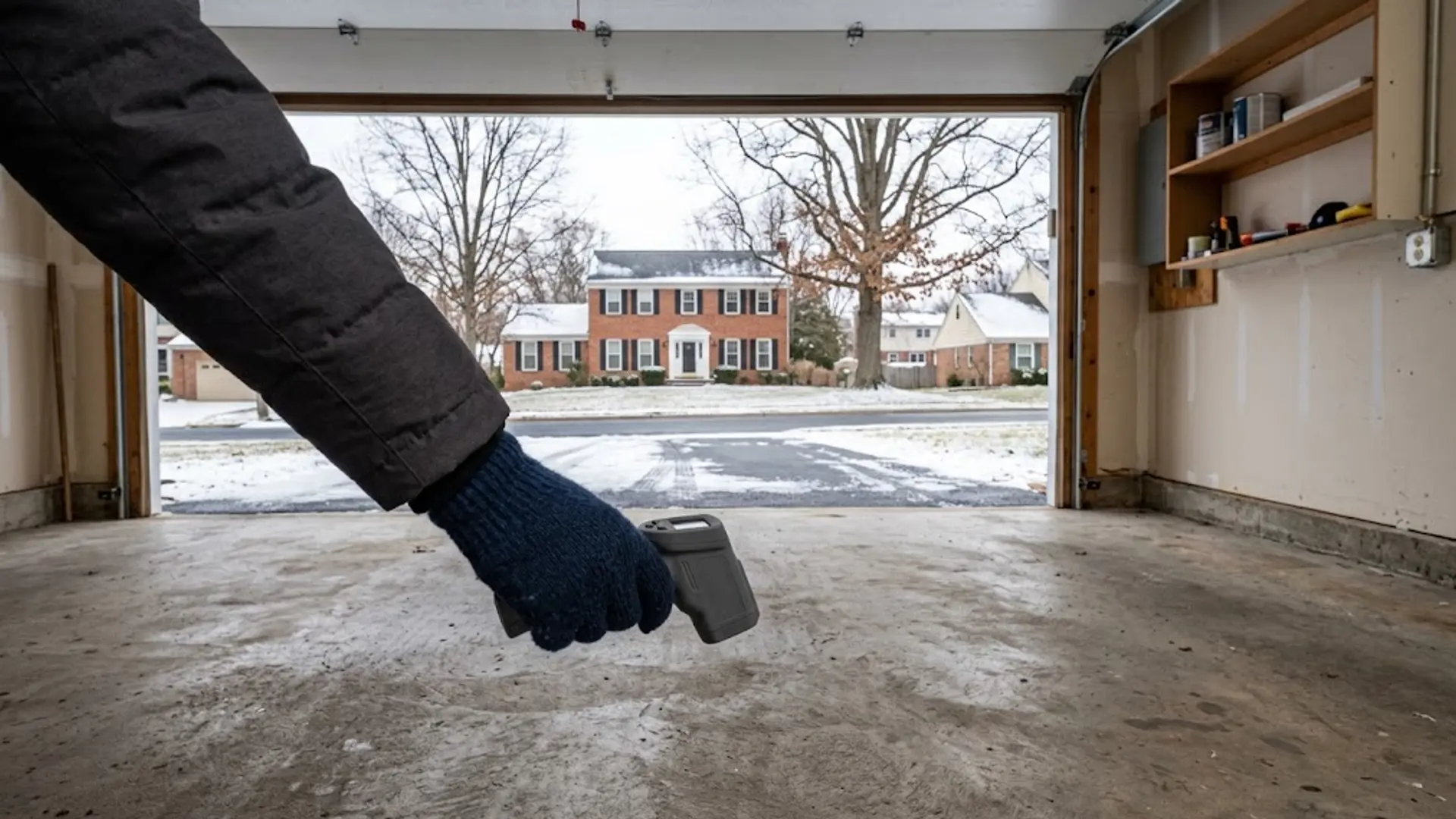
The number that matters for a winter install is concrete temperature, and it's rarely the number on your phone. Concrete has thermal mass, so it can lag the air by a day or more. After a cold snap, a 45°F afternoon can sit on a slab still in the 30s. After a mild week, a 35°F morning may find an attached garage slab, warmed by the house next to it, well above that. The strip by the door usually reads coldest.
Each coating layer responds differently:
- Epoxy basecoat: bonds to the concrete and is the most temperature-sensitive layer. Most epoxies are specified for slabs around 50°F and up, and their cure slows sharply below that.
- Polyaspartic topcoat: a fast-curing, UV-stable finish that's typically rated to cure on much colder concrete.
- Dew point: the slab needs to stay at least 5°F above it, or moisture condenses on the surface and weakens the bond.
Elite Diamond's hybrid system pairs an epoxy basecoat for bond strength with a polyaspartic topcoat for durability, so the epoxy base usually sets the limit for a winter date.
Why Winter Can Beat Summer
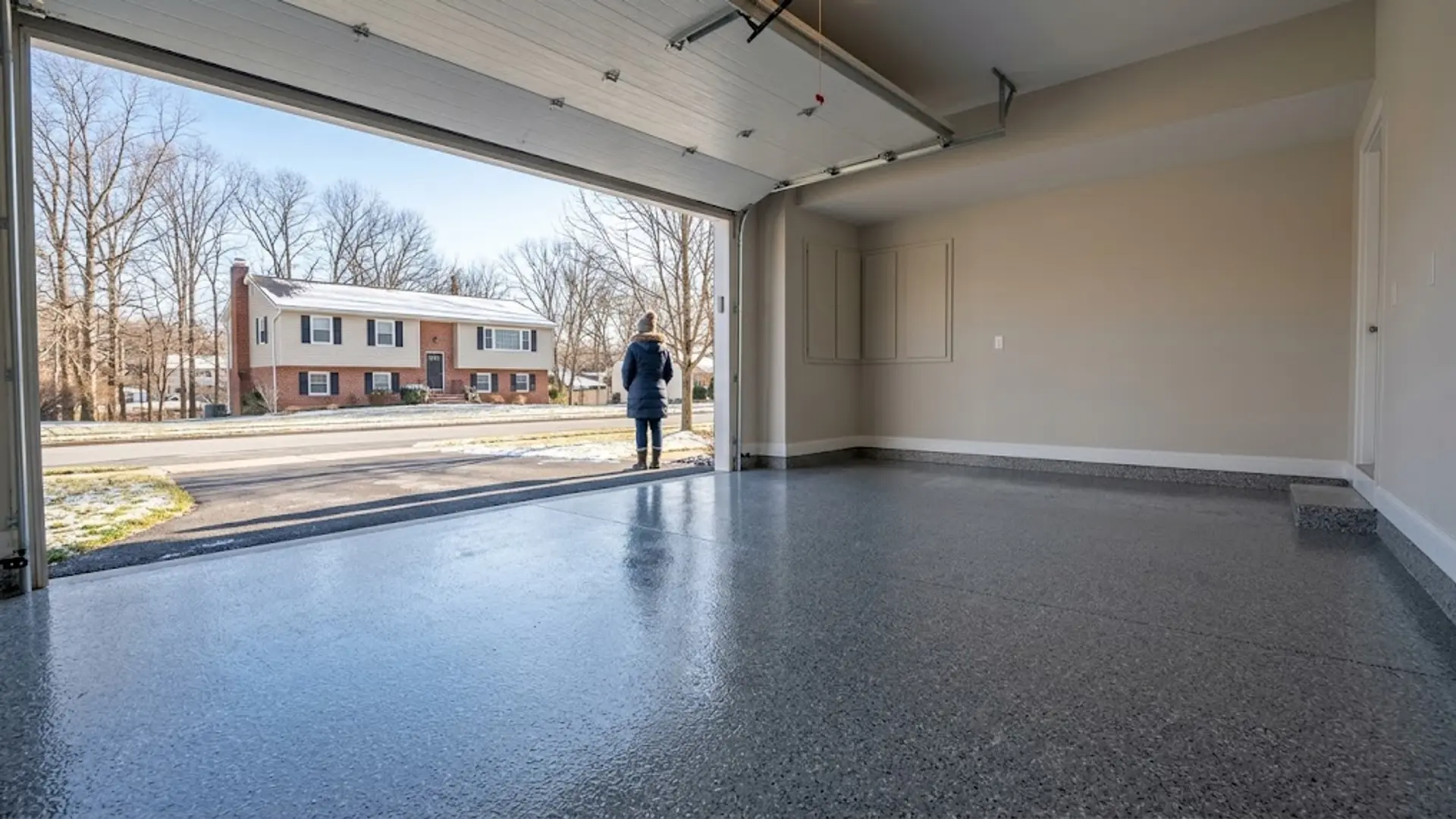
Dry air gives winter one real advantage over a Mid-Atlantic summer. On a humid July afternoon in Harford County, the dew point can climb close to a cool slab's temperature, and the slab sweats. Condensation under a fresh coat undermines adhesion. Winter air holds less moisture, so a slab in range sits well above the dew point and the coating bonds to dry concrete.
Coat Before Road Salt Season
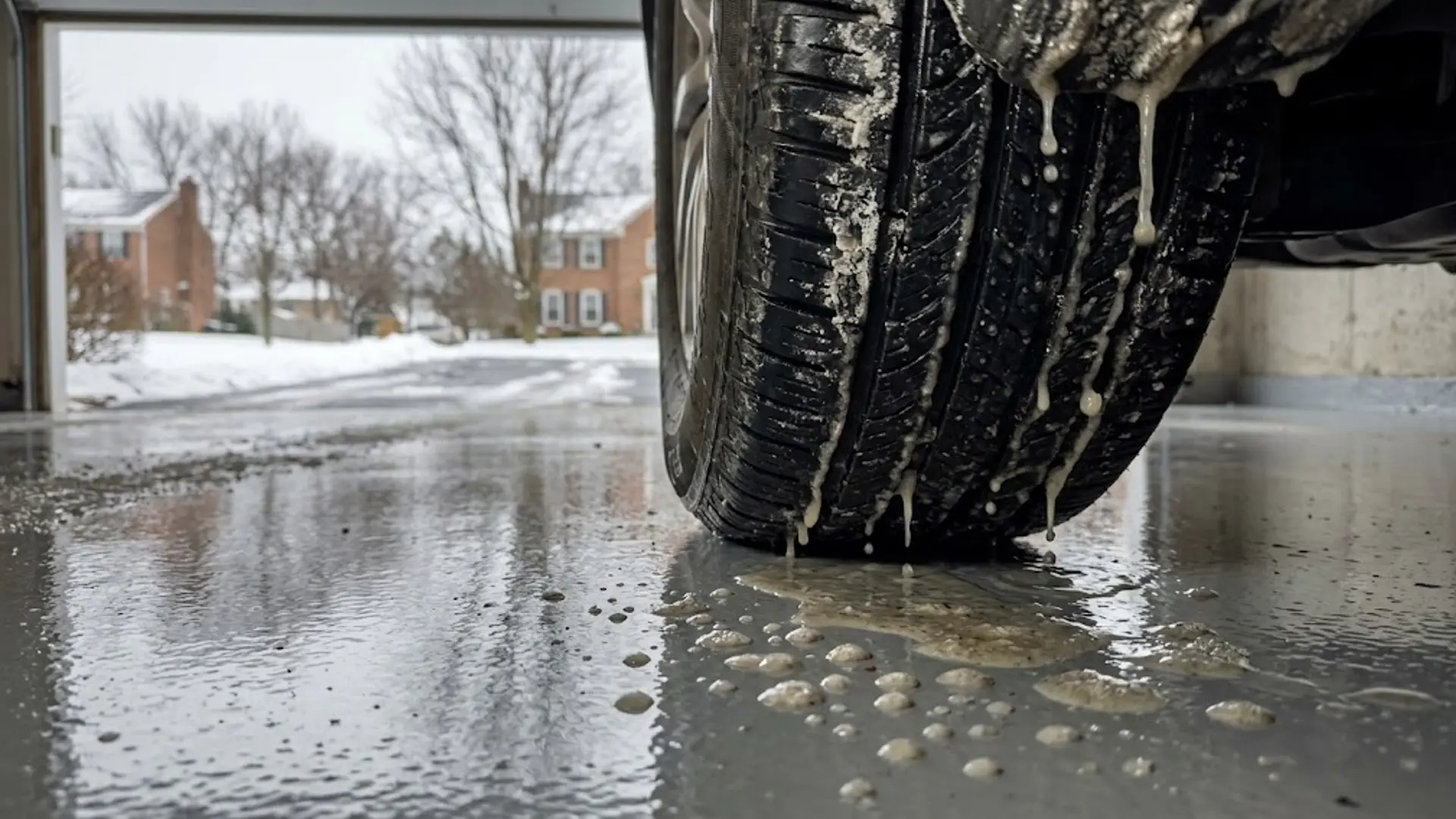
A late-fall or early-winter install protects the slab before its hardest months. Cars track salt brine onto bare concrete, where it soaks into the pores, and each freeze expands that trapped moisture. A winter's worth of road salt and 50 to 70 freeze-thaw cycles breaks the surface down. A sealed coating keeps brine on top, where you can rinse it off.
Most residential installs take two to three days, with light foot traffic after 24 hours and vehicles after 72, so plan for the cars to sit outside during a dry stretch.
What Rules Out a Winter Install
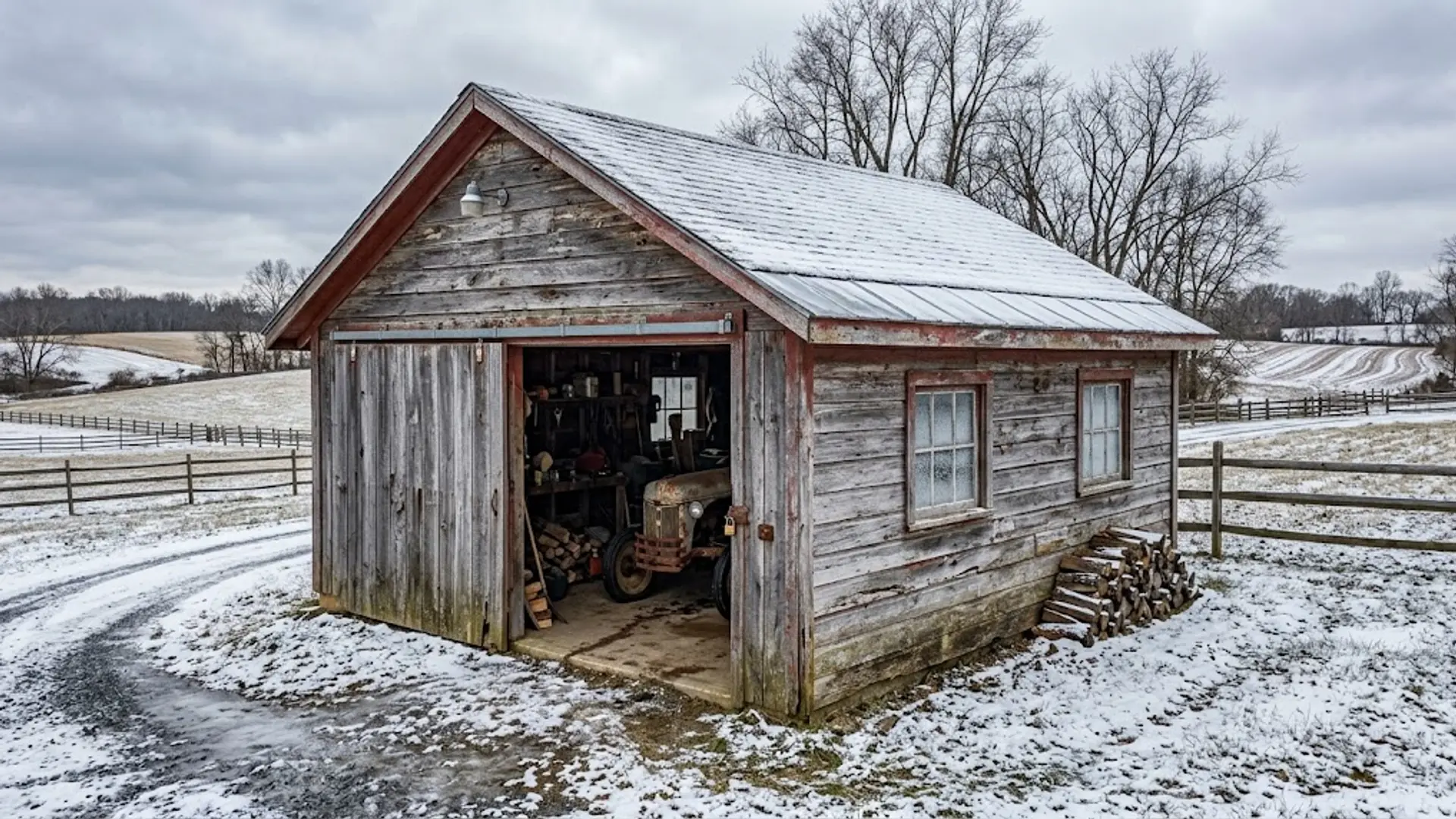
Two conditions usually mean a garage should wait.
The first is an unheated detached garage that can't hold the slab in range. They're common around Jarrettsville, MD and rural Harford and Cecil counties, where a slab can sit in the 20s through a cold stretch and often needs a mild spell or a spring date.
The second is slab moisture that won't test out. Moisture vapor rising through concrete pushes against the coating from below, the same moisture failure behind bubbling and peeling, so the test happens before any coating goes down.
Frequently Asked Questions
Is fall or winter better for coating a garage floor in Maryland?
Fall and winter both work for coating a garage floor in Maryland. Fall gives unheated and detached garages warmer slabs and a wider scheduling window, while winter offers drier air. For an attached garage that holds slab temperature, the deciding factor is usually which dates fit your schedule.
Will a coated garage floor be slippery with snow and slush?
A coated garage floor doesn't have to be slippery with snow and slush. Elite Diamond Coatings includes anti-slip additives in every coating system and adjusts the texture to the space. Wet slush on any smooth surface deserves care, and squeegeeing meltwater toward the door helps.
How long does a garage floor coating take to cure in cold weather?
Cold weather lengthens the cure time for a garage floor coating, because chemical reactions slow as slab temperature drops. The 24-hour foot traffic and 72-hour vehicle timeline assumes a slab within the coating's range, so a cooler slab may need a longer wait before you park on it.
Planning a Winter Garage Floor Coating?
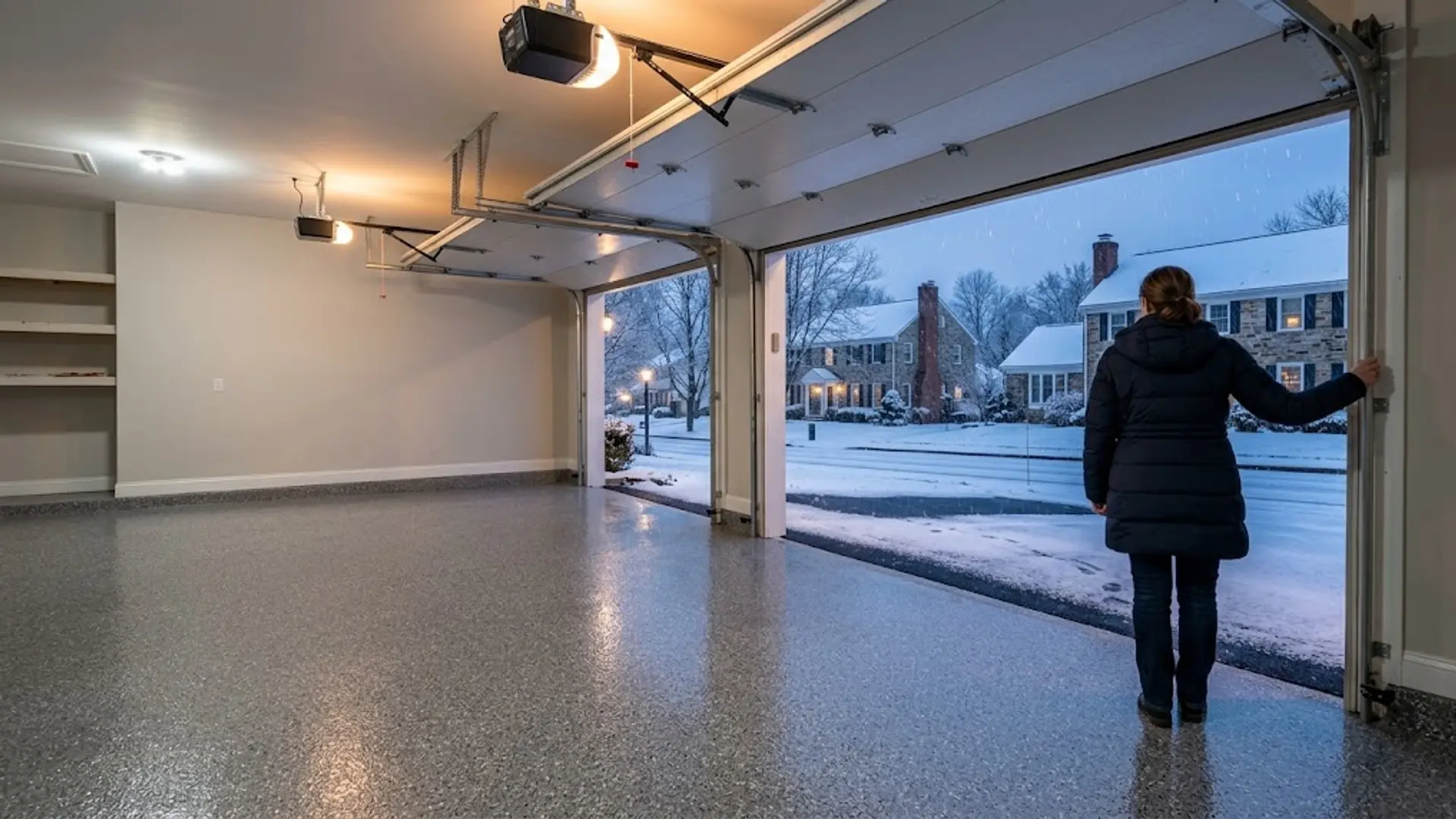
Concrete that's in range and tests dry can be coated in December or January and face its first salt season sealed, while a cold detached garage or damp slab is better scheduled for a milder stretch.
Contact Elite Diamond Coatings
or call (443) 367-1355
for a free quote and a slab check.