

Best Flooring for a Wet Basement: What Works in Delaware Valley Homes (2026)
The best flooring for a wet basement in the Delaware Valley is a seamless, sealed concrete coating, such as epoxy or polyaspartic. These flooring solutions manage moisture rising through the slab instead of trapping it the way carpet, hardwood, and laminate do. Clay-heavy soils and high water tables push groundwater up through basement slabs here, and humid summers pile on. Anything that holds moisture or rots tends to fail under those conditions.
The mistake we see most often is treating a basement floor like any other room. Homeowners frequently install a finish that looks great until the first wet season exposes it. In a region with this much groundwater, the floor has to manage moisture, not just cover it. Elite Diamond Coatings installs moisture-ready basement floor coatings across the Delaware Valley, where prep and a slab moisture test are what keep a basement floor from failing. The following sections explain why most basement flooring fails in the Delaware Valley, why a sealed coating works, and when a wet basement needs waterproofing before any floor goes down.
Why Most Basement Flooring Fails in the Delaware Valley
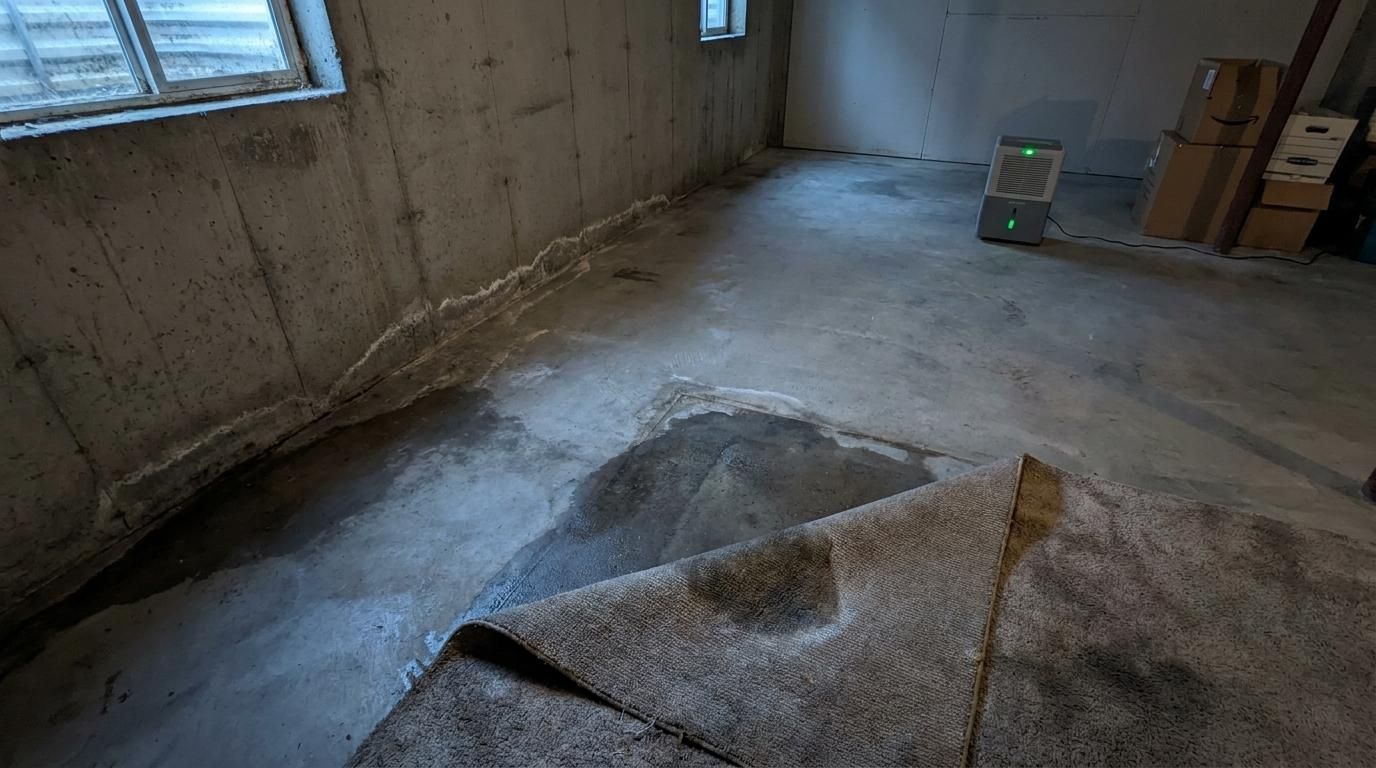
The popular basement floors fail here for the same reason: they can't cope with moisture rising through the slab.
- Carpet: traps humidity and water, growing mold and mildew in a damp basement
- Hardwood and laminate: warp, cup, and swell when slab moisture reaches them
- Vinyl plank over a wet slab: can trap moisture underneath and lift at the seams
- Tile: survives water but can crack, and unsealed grout lines still let moisture through
None of these manage water; they just sit on top of it. In a high-water-table basement, that's a slow failure waiting for a wet spring. We see it often in older Hockessin homes, where finished basements rest on damp, clay-heavy ground and a wood or carpet floor that looked fine at move-in starts cupping or smelling musty within a season or two.
Why a Sealed Concrete Coating Is the Best Wet-Basement Floor
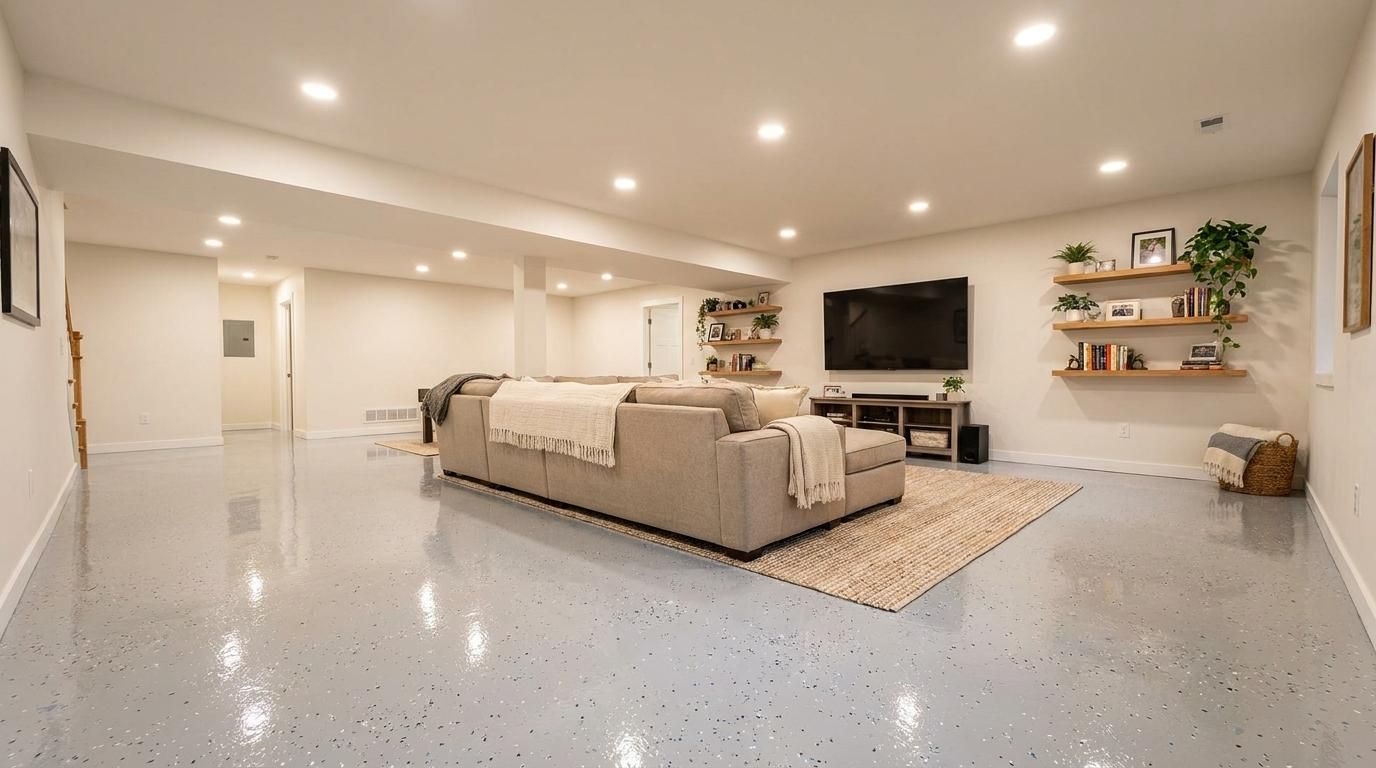
A professionally coated concrete floor is the finish built for the conditions a Delaware Valley basement actually has:
- Seamless and non-porous: no seams or grout for water to seep through
- Bonds to the slab: a properly prepped epoxy or polyaspartic coating manages moisture at the surface
- Mold-resistant: nothing organic for mildew to grow on, unlike carpet or wood
- Durable and easy to clean: handles a finished basement, a home gym, or storage with equal ease
When it comes to outperforming traditional basement flooring options, high-performance coatings consistently come out on top. Investing in this seamless barrier means less time worrying about moisture damage and more time actually enjoying your sub-grade living space.
When a Wet Basement Needs More Than a Floor Coating
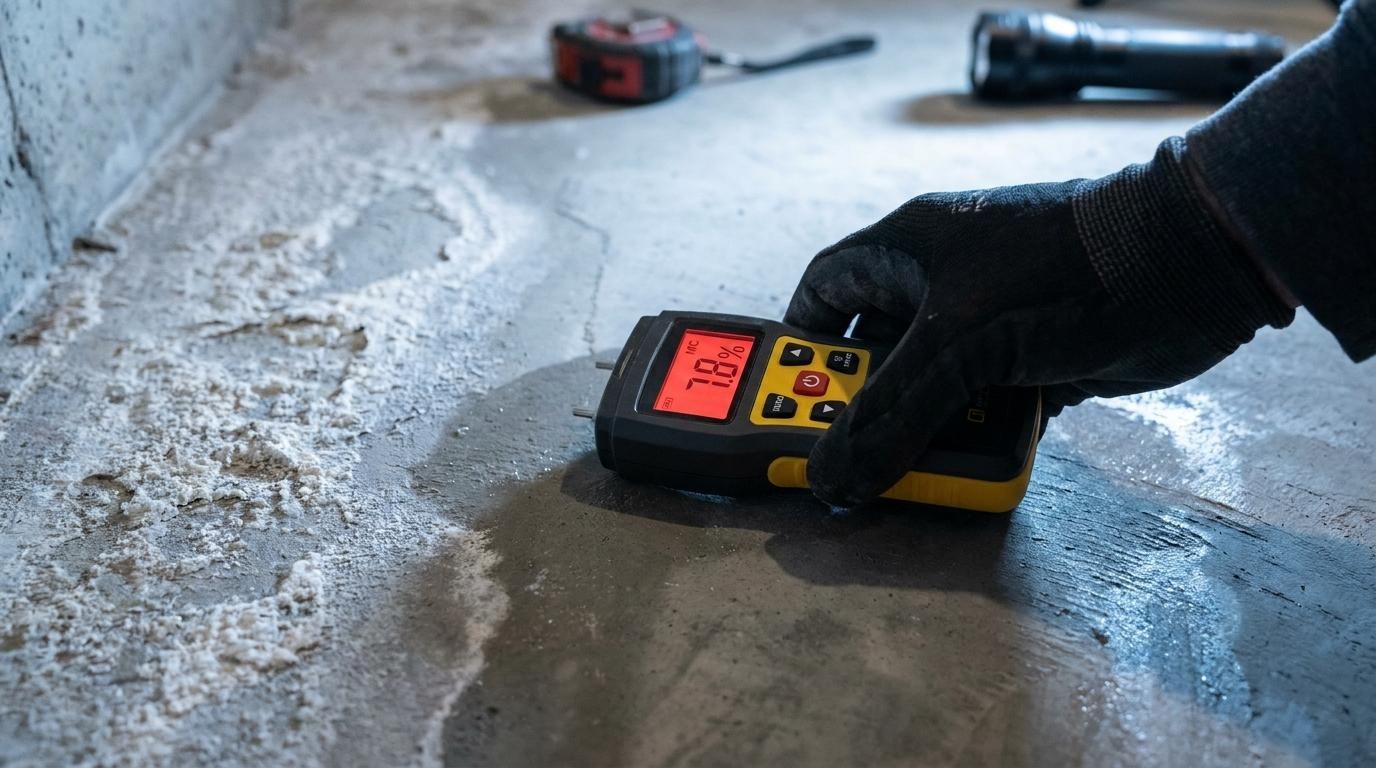
Sometimes the moisture is heavy enough that a finish floor alone isn't the fix. Watch for these signs:
- Standing water or active leaks after rain, which point to drainage or sealing issues
- Efflorescence, the white mineral residue, or a high moisture-meter reading on the slab
- A musty odor and persistent humidity even with a dehumidifier running
In these challenging environments, jumping straight to a decorative floor will only lead to peeling and failure down the road. Addressing the root cause with dedicated basement waterproofing coatings creates a reliable barrier that stops active moisture in its tracks. Once your foundation is completely dry and stabilized, you can safely apply a beautiful, long-lasting finish floor with total peace of mind.
Frequently Asked Questions
What is the best flooring for a wet basement?
The best flooring for a wet basement in the Delaware Valley is a seamless, sealed concrete coating such as epoxy or polyaspartic. Because it is non-porous and bonds to the slab, it manages the moisture that rises through concrete here, where carpet, wood, and laminate trap water and fail. It is also durable and easy to clean.
Can you put epoxy flooring in a basement that gets wet?
Yes, epoxy and polyaspartic coatings are well suited to basements, but the slab has to be tested and properly prepped first. If moisture readings are high, a moisture-tolerant primer or a waterproofing step is applied before the coating so it bonds and lasts. Skipping that prep is what causes basement coatings to fail.
Why does my Delaware Valley basement stay damp?
Delaware Valley basements stay damp largely because of clay-heavy soils and high water tables that push groundwater against and up through the foundation, plus humid summers. That moisture moves through bare concrete, which is why the right basement floor has to manage water rather than just cover the slab.
Choose a Basement Floor Built for Delaware Valley Moisture
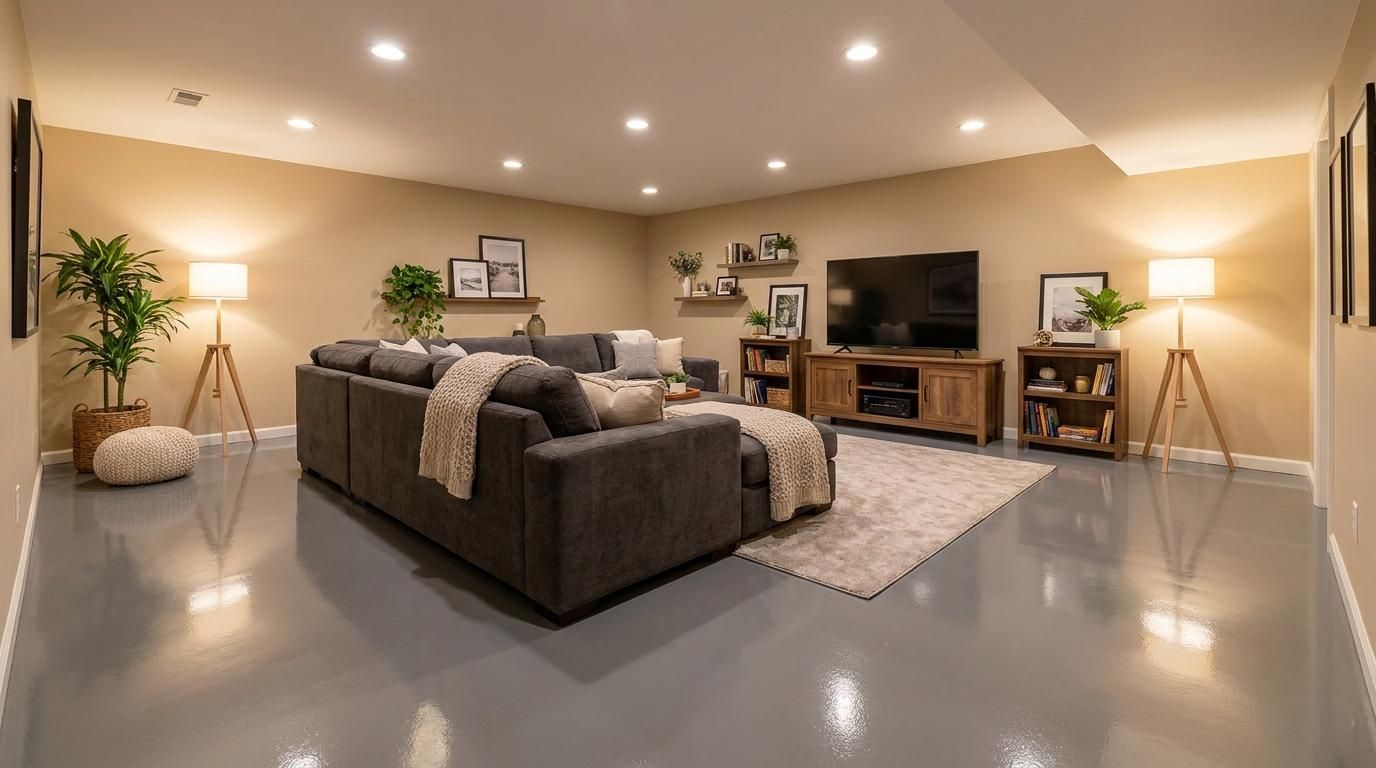
The best flooring for a wet basement is one that can handle the groundwater and humidity that come with living here. A seamless, sealed concrete coating does the job, while carpet, wood, and tile eventually give way to moisture. Test the slab first, add a waterproofing step if the readings call for it, and a coated floor stays dry and clean for years.
Dealing with a damp basement? Contact Elite Diamond Coatings or call (443) 367-1355 for a free basement moisture assessment across the Delaware Valley.