

How Long Does Epoxy Flooring Last? A Lifespan Guide
Professionally installed epoxy flooring lasts 10 to 20 years in residential garages and basements. DIY epoxy kits last 2 to 5 years before peeling or yellowing. Surface preparation and material quality drive the gap. As a concrete coating specialist in the Delaware Valley, Elite Diamond Coatings applies polyaspartic systems that outlast standard epoxy by 5 to 10 years.
Spring is when most garage floor coating failures reveal themselves. A winter's worth of road salt, moisture, and 50 to 70 freeze-thaw cycles exposes every weakness in bond quality and surface prep. If your floor is cracking or peeling after this past season, the answers are below.
Epoxy Lifespan by Installation Type
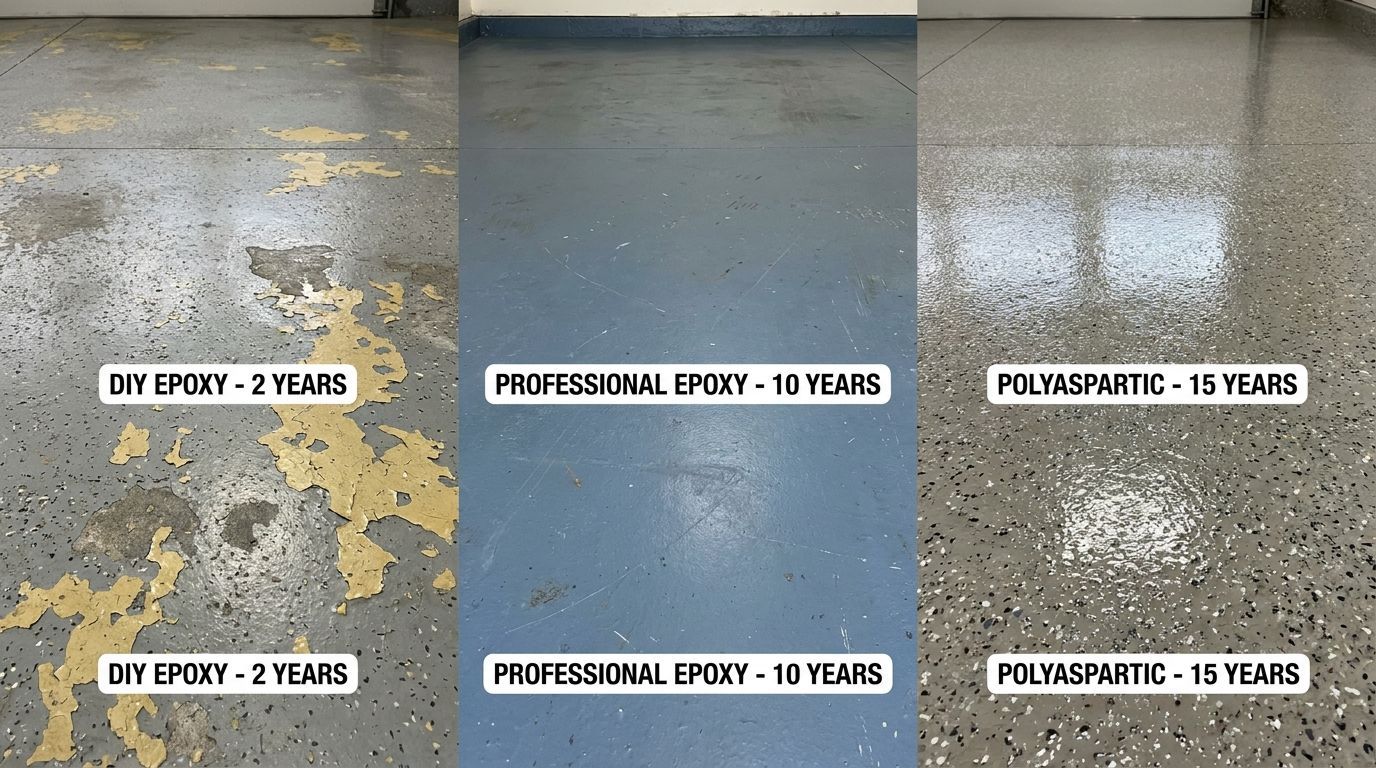
Not all epoxy installations perform equally. The material matters, but how it was applied determines whether it reaches its full potential lifespan.
DIY Epoxy Kits
Big-box store kits use water-based epoxy that creates a thin film over concrete. Without proper grinding, the coating relies on a chemical etch that rarely produces adequate adhesion. These systems last 2 to 5 years in garages with regular vehicle traffic and often begin peeling at tire contact points within 18 months.
Professional Standard Epoxy
100%-solids epoxy applied over diamond-ground concrete lasts 10 to 20 years in residential garages. Professional installers build thickness through multiple coats and can add polyurethane or polyaspartic topcoats that extend UV and abrasion resistance. The installation process determines the outcome more than the epoxy brand.
Epoxy With Polyaspartic Topcoat
When a polyaspartic clear coat goes over an epoxy base, the system gains UV stability and chemical resistance that standard epoxy alone can't match. These hybrid systems push lifespans toward 15 to 20 years. Elite Diamond Coatings' full polyaspartic systems skip the epoxy base entirely and deliver that performance through a single faster-curing chemistry.
What Shortens an Epoxy Floor's Lifespan
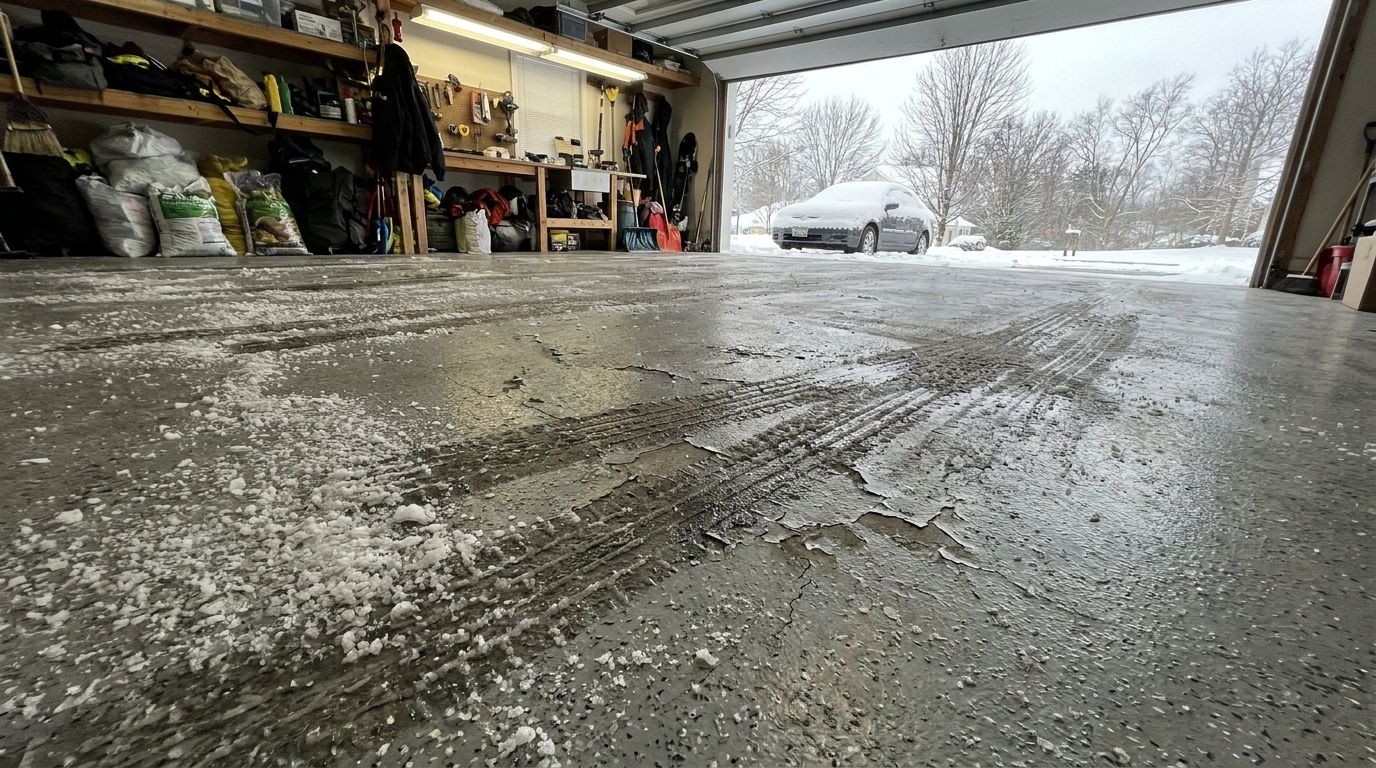
Several factors pull an epoxy floor's lifespan well below its potential.
- Poor surface preparation: Acid etching instead of diamond grinding leaves a weak bond profile. The floor may look good for six months but delaminates under thermal or mechanical stress.
- Moisture vapor transmission: Concrete slabs without a vapor barrier push moisture upward through the pores. That moisture breaks the epoxy bond from underneath, a common failure in Delaware Valley basements and older slab-on-grade garages.
- UV exposure: Epoxy yellows and chalks under direct sunlight. Garages with south-facing doors or frequent open-door use show UV damage within 2 to 3 years.
- Hot tire pickup: Warm tires soften standard epoxy on contact. Over time, this thermal cycling lifts the coating in strips at each tire location.
Salt tracked in from winter roads accelerates all four failure modes. Garages in Hockessin and northern Delaware see faster coating degradation than homes in warmer climates because chloride compounds attack both the coating surface and the concrete pores underneath.
How Polyaspartic Compares on Lifespan
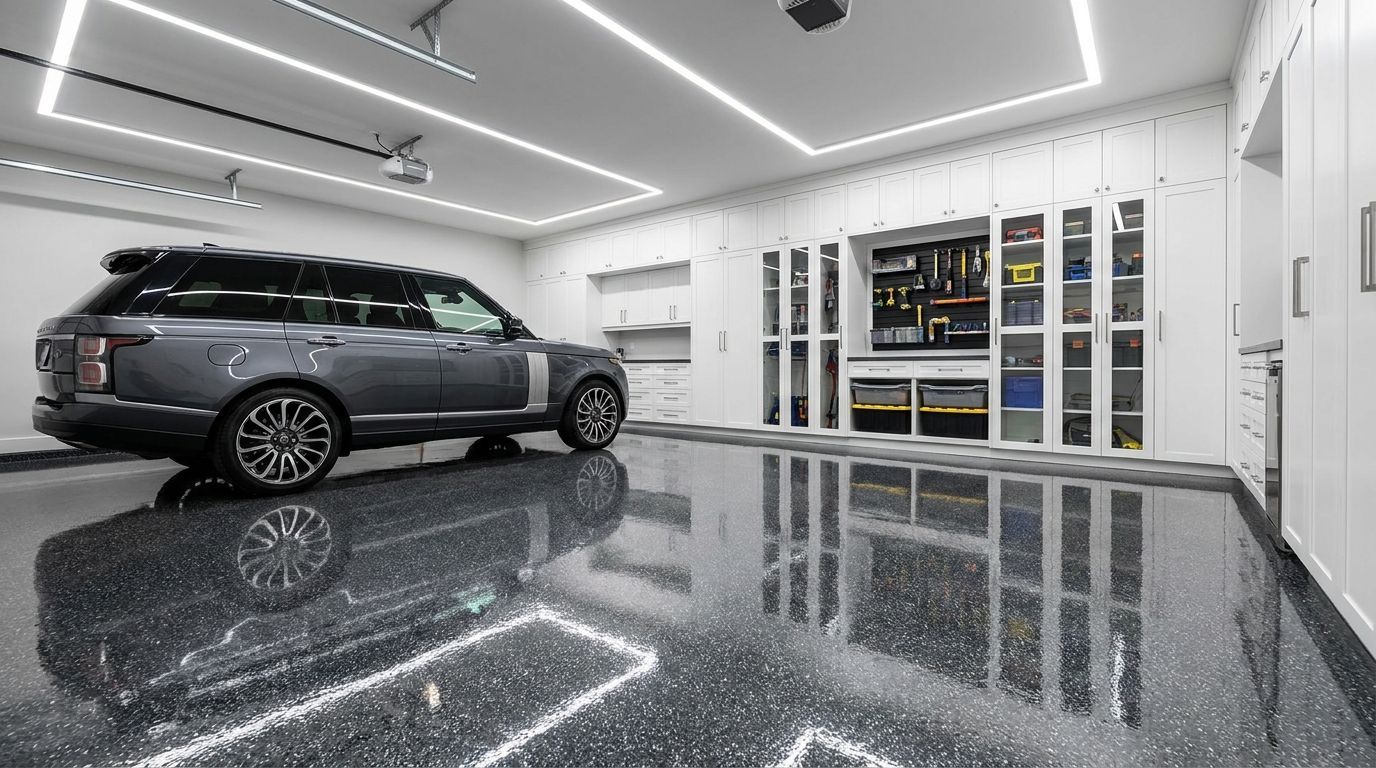
Polyaspartic coatings are designed to last 15 to 20 years under the same conditions where standard epoxy delivers 10 to 15. The chemistry is inherently UV-stable, flexible enough to move with concrete through freeze-thaw cycles, and resistant to hot tire pickup.
The practical difference in the Delaware Valley: a polyaspartic floor installed in 2026 shouldn't need replacement until the 2040s. A standard epoxy floor installed today will likely need a recoat by the early 2030s. That extra decade eliminates one full round of grinding, reprepping, and lost garage access.
Elite Diamond Coatings uses polyaspartic as its primary concrete floor coating system because it outperforms standard epoxy in every lifespan metric that matters for mid-Atlantic residential garages.
Frequently Asked Questions
How often does epoxy flooring need to be replaced?
Professional epoxy typically needs replacement or recoating every 10 to 15 years in residential garages, though poorly installed systems may fail within 5 years. Polyaspartic systems extend that cycle to 15 to 20 years, cutting the number of lifetime replacements in half.
Does polyaspartic last longer than epoxy?
Yes. Polyaspartic coatings last 15 to 20 years compared to standard epoxy's 10 to 15 in residential applications. UV stability, flexibility, and chemical resistance give polyaspartic measurable advantages in climates with heavy seasonal cycling like the Delaware Valley.
Can you extend the life of an existing epoxy floor?
A polyaspartic topcoat applied over sound existing epoxy can add 5 to 10 years of protection. Elite Diamond Coatings evaluates existing floors to determine whether a topcoat or a full system replacement makes more sense for the concrete's current condition.
Protect Your Investment for the Long Run
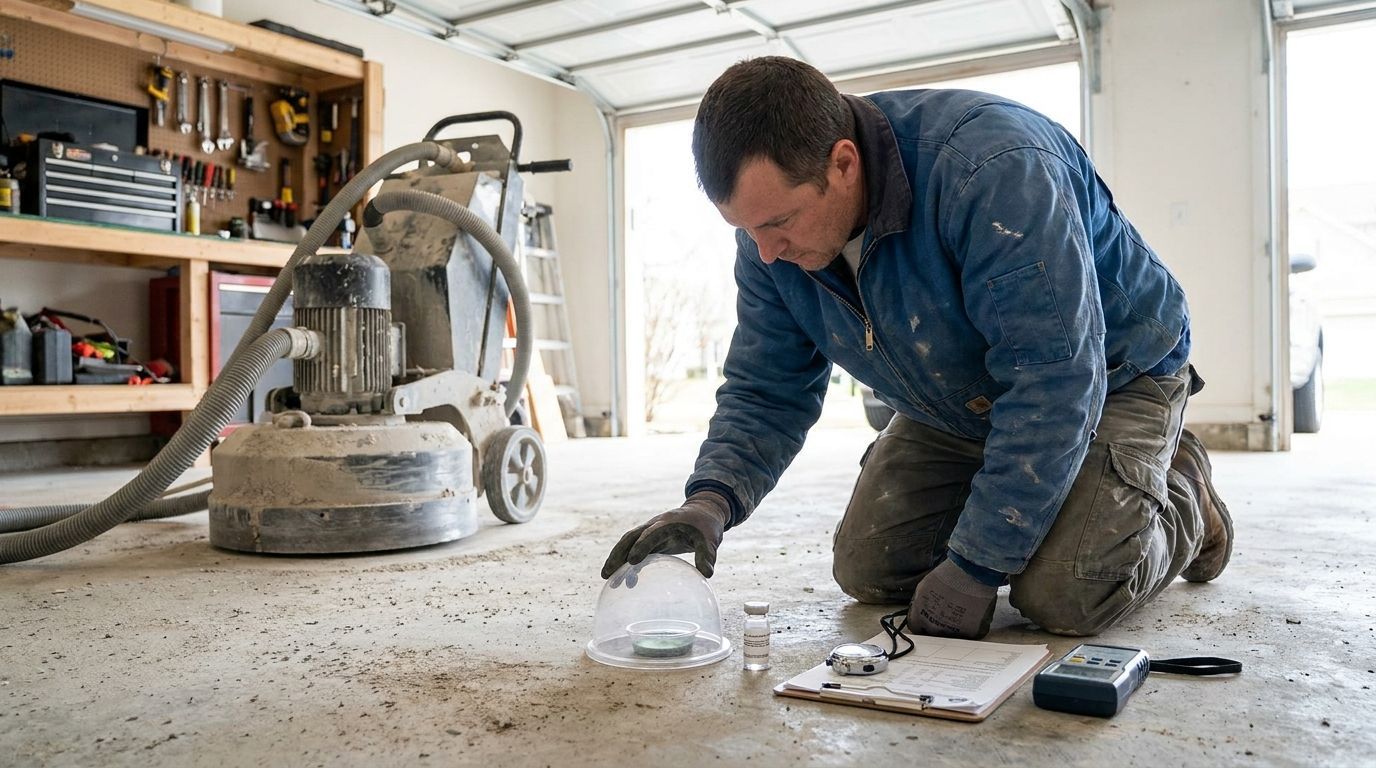
The lifespan of any floor coating traces back to two decisions: the material system and the quality of surface preparation. Standard epoxy performs well when installed correctly, but polyaspartic systems deliver longer service life with less maintenance in demanding climates.
Contact Elite Diamond Coatings at (443) 367-1355 to discuss which coating system fits your garage, basement, or outdoor space and how long you can expect it to last.