

Epoxy Floor vs Tile for Basements: Which Is Better for Delaware Valley Homes?
Epoxy floor coatings cost $3 to $12 per square foot in Delaware Valley basements. Tile costs $7 to $15. For most finished basements in this region, epoxy is the better choice because basement floors face moisture from below, and epoxy handles that pressure when paired with a vapor barrier.
Elite Diamond Coatings installs polyaspartic concrete floor coatings with vapor barriers built into every basement project. We work across Delaware, Maryland, and southeastern Pennsylvania.
If you're finishing a basement in Kennett Square or Wilmington, the choice usually comes down to tile or a concrete coating. Both handle foot traffic. What separates them is how each material responds when moisture pushes through the slab.
Cost Comparison: Coatings vs Tile for Basements
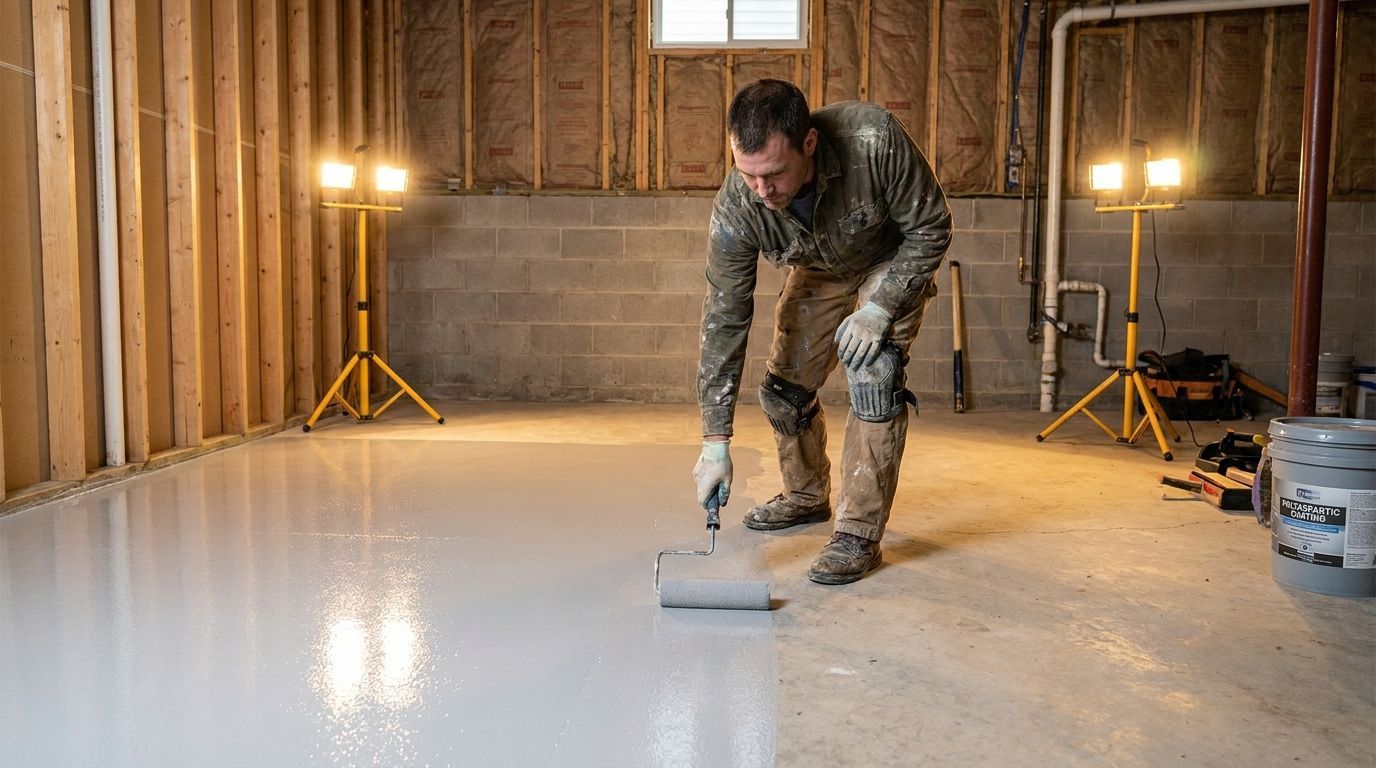
Concrete coatings and tile start at different price points, and the gap widens once you factor in prep work and long-term maintenance.
What Concrete Coatings Cost
Professional epoxy and polyaspartic basement coatings run $3 to $12 per square foot installed, depending on system type and slab condition. A 500-square-foot basement typically costs $1,500 to $6,000. Surface preparation, including diamond grinding and moisture testing, accounts for about a third of the total. Polyaspartic systems fall at the upper end of that range but include UV stability and faster cure times.
What Tile Costs
Ceramic tile runs $7 to $15 per square foot installed. Porcelain starts around $10 and can exceed $20 for premium options. Add $1 to $2 per square foot for grout, $0.50 to $1 for underlayment, and $2 to $5 for removal of existing flooring if needed. A 500-square-foot basement tiled in basic ceramic costs $3,500 to $7,500 before any subfloor moisture remediation.
Moisture Performance in Delaware Valley Basements
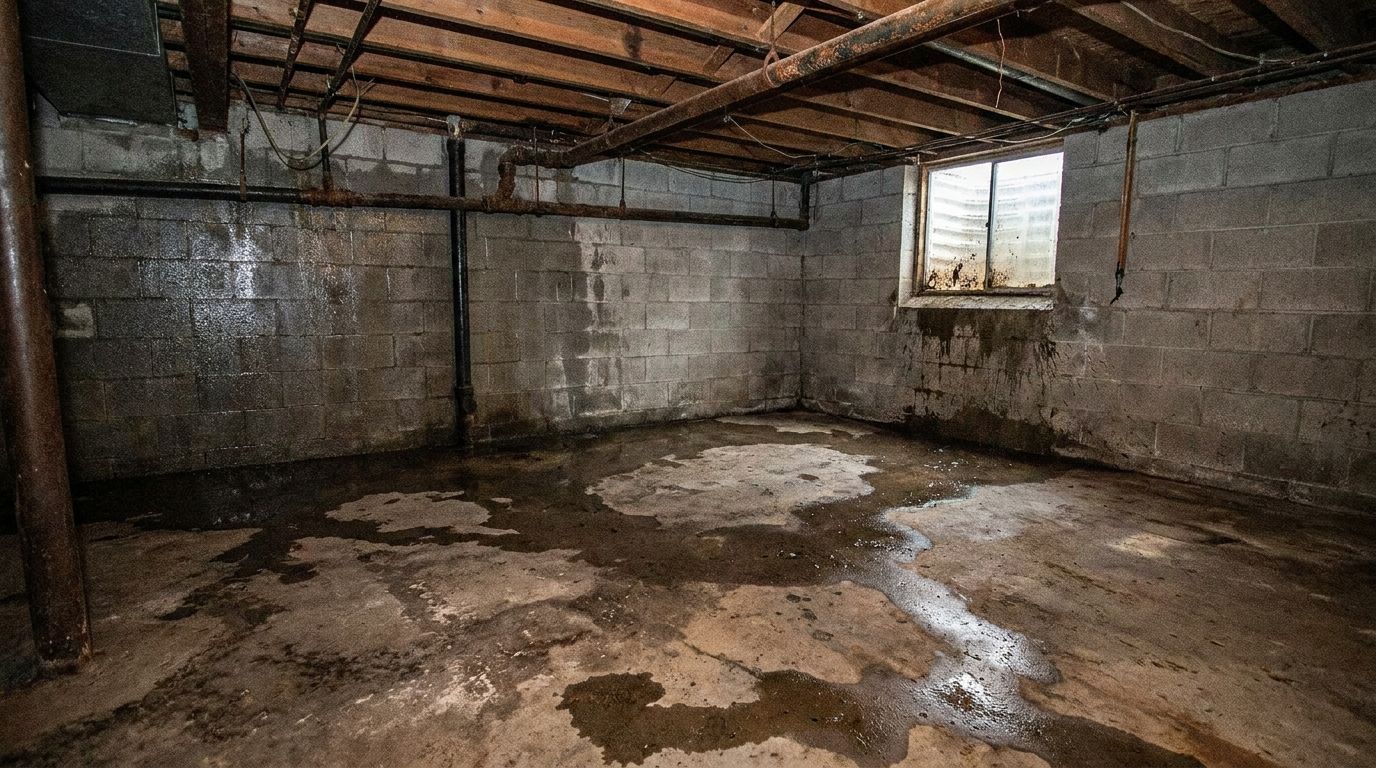
Delaware Valley basements sit in clay-heavy soil with a high seasonal water table. Moisture vapor pushes through concrete slabs from spring through late summer, creating conditions that test any flooring material.
Tile handles surface water, but grout lines absorb moisture and harbor mold over time. When a slab shifts from seasonal soil movement, rigid grout cracks and lets water pool underneath. Homeowners often don't notice until mold has spread beneath the surface.
Concrete coatings bond directly to the slab as a seamless layer. Polyaspartic systems applied over a vapor barrier create a moisture-resistant surface with no joints for water to penetrate. That bond also flexes with minor slab movement instead of cracking. Homeowners comparing stained concrete vs epoxy for basements will find the same moisture advantage across professional coating systems.
Installation, Maintenance, and Lifespan
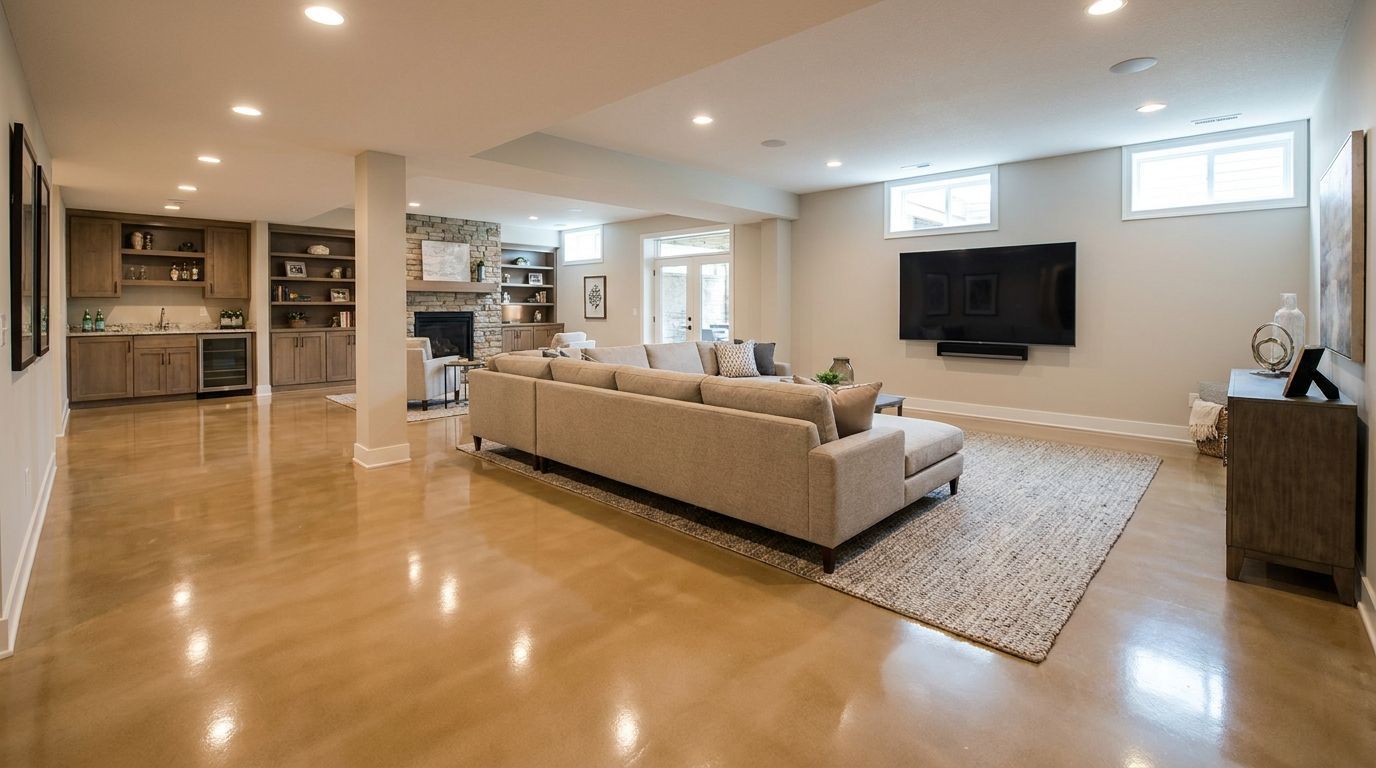
How quickly the floor goes down and how long it holds up matter as much as what it costs to install.
Installation Timeline
Professional concrete coatings take one to two days for most Kennett Square and Delaware Valley basements, including surface prep and curing. Tile installation runs five to seven days once you account for subfloor prep, adhesive setting, grouting, and sealing.
Maintenance
Coated basement floors need occasional mopping and a deep clean every two to three years. Tile requires regular grout cleaning, periodic resealing, and replacement of cracked or chipped sections. In a moisture-prone basement, grout maintenance becomes a recurring expense.
Lifespan
Professional polyaspartic coatings carry manufacturer ratings of 15 to 20 years, and Elite Diamond Coatings backs installations with a lifetime warranty. Tile can last 20 or more years in dry conditions, but in a Delaware Valley basement with active moisture, grout failure typically starts within five to ten years and accelerates from there.
Frequently Asked Questions
Is epoxy flooring cheaper than tile for a basement?
Yes. Professional epoxy and polyaspartic coatings run $3 to $12 per square foot installed, while ceramic tile costs $7 to $15 before adding grout, underlayment, and removal fees. For a 500-square-foot basement, coatings typically save $2,000 to $4,000 compared to mid-range tile.
Can you apply a concrete coating over existing basement tile?
In most cases, the tile surface needs grinding or mechanical abrasion for the coating to bond properly. Cracked or hollow tiles should be removed first. Elite Diamond Coatings evaluates the existing surface during a free quote to determine whether overlay or removal is the better approach.
Does basement tile crack from moisture in the Delaware Valley?
Tile itself resists water, but grout does not. Clay soils across the Delaware Valley shift with seasonal moisture cycles, and that movement stresses grout joints until they crack. Once water enters through failed grout, it gets trapped beneath the tile and leads to mold and adhesive breakdown.
Protect Your Basement With a Floor Built for Moisture
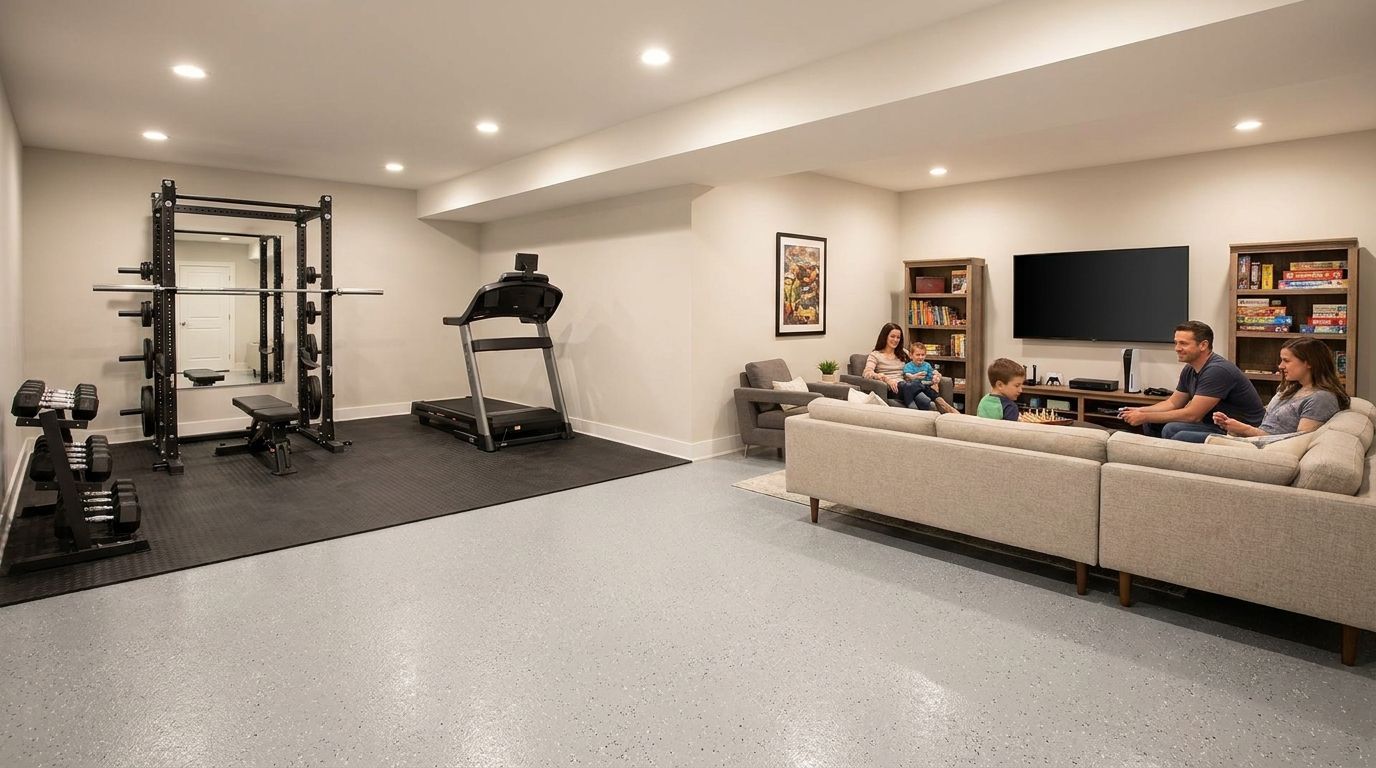
For most Delaware Valley basements, a concrete coating handles moisture, maintenance, and cost better than tile. Tile works in dry, stable environments, but below-grade slabs in this region rarely stay dry year-round.
Elite Diamond Coatings installs polyaspartic basement floor coatings with vapor barriers across Delaware, Maryland, and southeastern Pennsylvania. Contact us at (443) 367-1355 for a free quote on your basement project. If tile is the right fit for your space, a flooring contractor who specializes in below-grade tile work is the better call for that side of the job.