

Stained Concrete vs Epoxy: Key Differences Homeowners Should Know
Stained concrete vs epoxy covers two fundamentally different approaches: stained concrete penetrates the slab to alter its color, while epoxy coatings bond to the surface to add a protective layer. Elite Diamond Coatings helps Delaware Valley homeowners across Maryland, Delaware, and Pennsylvania choose the right system based on their floor's actual condition and how they’ll be using it.
If you've spent any time researching concrete floor options, you've probably found compelling arguments for both stained concrete and epoxy, and walked away more confused than when you started. That's because both are legitimate options. The right answer depends on your floor's condition, how you use the space, and how long you want the result to last. Here's the straight comparison.
What Stained Concrete Actually Is (and What It Isn't)
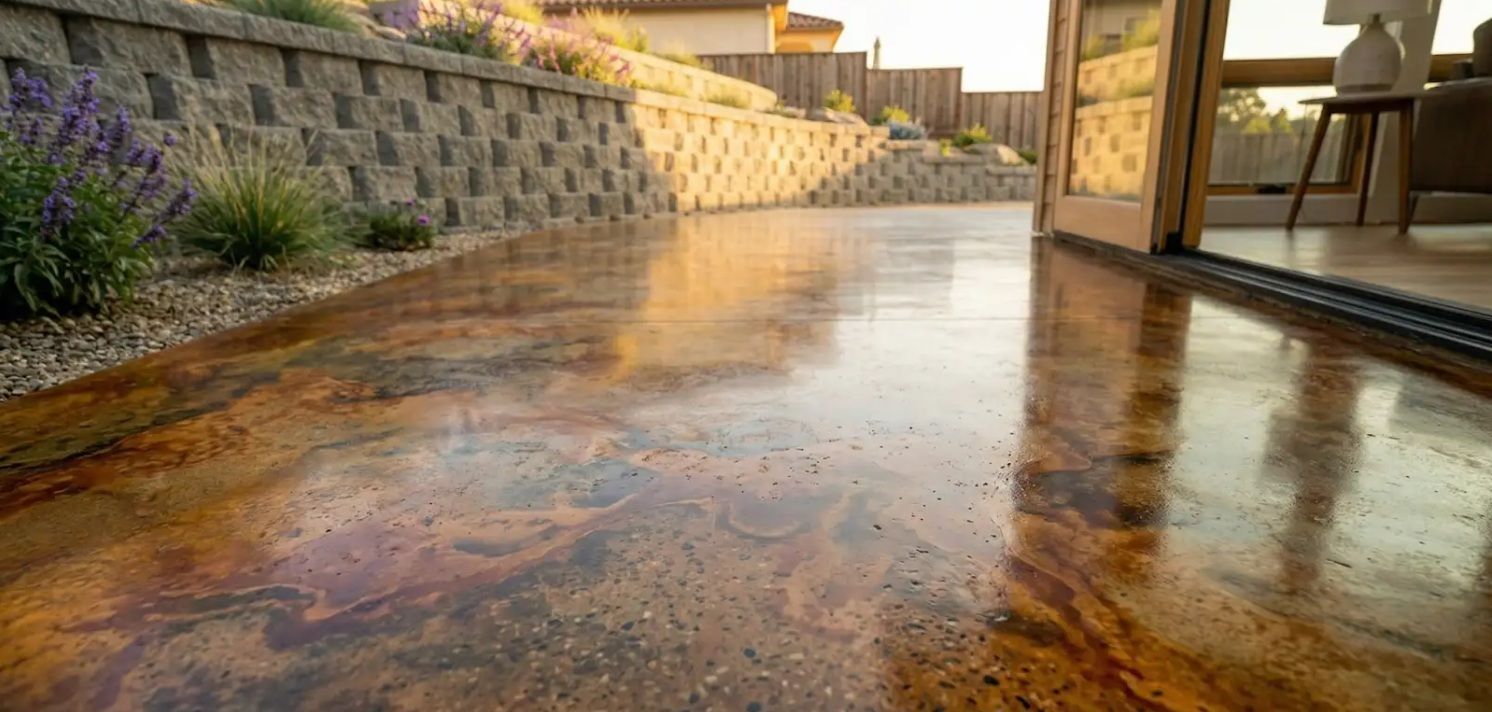
Stained concrete isn’t a coating in the traditional sense. Acid-based and water-based stains penetrate the concrete and react chemically or deposit pigment into its pores, altering the color of the slab itself rather than sitting on top of it. The result is a natural, variegated finish—no two stained floors look exactly alike.
Because the color lives inside the concrete, it doesn't peel or chip the way a surface film can. That said, it isn't a stand-alone protective system. A sealer on top is required to resist moisture, stains, and wear. Elite Diamond's grind and seal service pairs diamond surface refinement with commercial-grade penetrating sealers to deliver exactly this: a natural look with real durability behind it.
Where Stained Concrete Performs Well
Stained concrete tends to shine in interior spaces where aesthetics matter and traffic is moderate: retail environments, offices, finished living areas, and certain residential spaces like dining rooms or entryways. It's also a practical fit for homeowners who prefer a low-profile, industrial-chic finish over the glossy, high-build look of a full coating system.
It's worth being honest about its limitations. Stained concrete doesn't add surface hardness on its own, and a topical sealer won't hold up long-term in a working garage. If your slab has existing stains, cracks, or uneven porosity, those imperfections often show through the stain, sometimes more prominently than before. Surface prep matters as much here as with any other system.
What Epoxy Coatings Bring to the Table
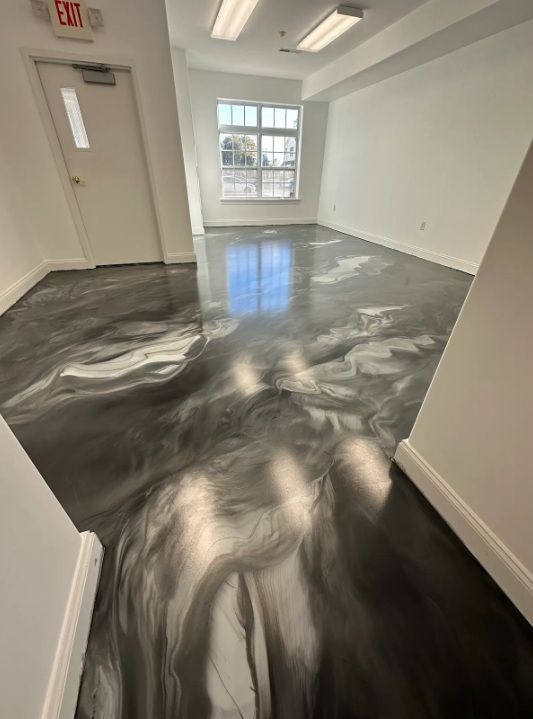
When most homeowners say "epoxy," they're thinking of a thick, bonded surface coating that protects the slab and changes how the space looks. Standard epoxy creates a hard, chemical-resistant layer that handles vehicle traffic and automotive fluids far better than a basic sealer. For garage floor coatings in the Delaware Valley, a full coating system is typically the right answer.
The material hierarchy matters: standard epoxy is a rigid bonded layer; polyaspartic is a UV-stable topcoat that cures faster and resists yellowing over time. At Elite Diamond Coatings, polyaspartic is the primary concrete coating system we install. With polyaspartic, light foot traffic is typically possible within 24 hours and full vehicle use within 72 hours. That kind of turnaround matters for most Delaware Valley homeowners. Metallic epoxy is also available for decorative work where a swirling, three-dimensional finish is the goal.
The Mid-Atlantic Factor: Coating Choice Matters
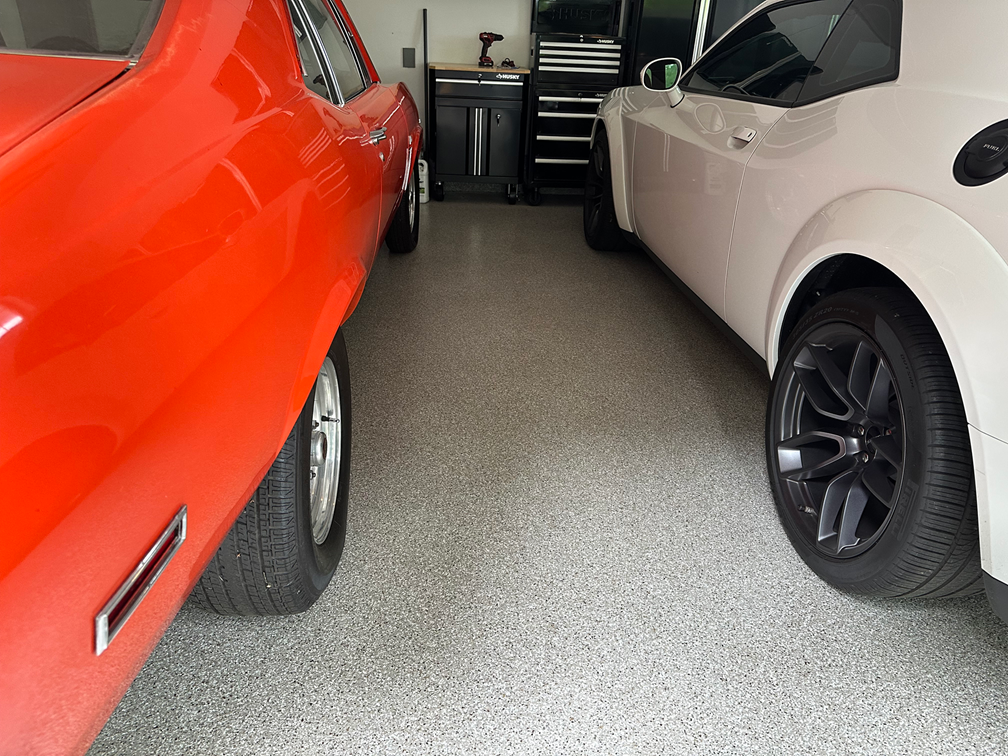
Delaware Valley homeowners face a specific stress pattern when it comes to their concrete surfaces. Mid-Atlantic winters bring real freeze-thaw cycles: repeated temperature swings across the freezing mark put mechanical stress on any material bonded to concrete. Road salt tracked in from highway commutes compounds that, and the region's clay-heavy soils push below-grade moisture into basement slabs year-round.
A stained floor with a topical sealer works well in a finished interior or low-traffic space. But on a Bel Air homeowner's garage floor, that sealer needs more frequent maintenance to survive mid-Atlantic winters. A polyaspartic system, applied over a diamond-ground surface, handles thermal cycling without delaminating. The coating you choose affects the floor’s aesthetic and durability.
Frequently Asked Questions
Can you stain concrete that already has an epoxy or polyaspartic coating on it?
No. Stains work by penetrating bare concrete, and a cured coating seals those pores. If you want a stained look on a previously coated floor, the existing system must be removed first, which means grinding back to the bare slab. That's a significant step that requires professional equipment and adds to the project cost.
Is stained concrete cheaper than a full coating system?
Stained concrete combined with a professional grind and seal is generally more cost-effective than a full polyaspartic coating system, and it's the right fit for spaces where a high-build coating isn't necessary. Elite Diamond Coatings is honest about this tradeoff: if your floor doesn't need a full system, we won’t recommend it.
How long does stained concrete with a sealer last in a garage?
In a working garage with vehicle traffic, a stained concrete and sealer system typically needs resealing every two to four years, especially in the Delaware Valley where road salt and freeze-thaw cycles accelerate wear.
The Right Coating for Your Floor Starts With an Honest Assessment
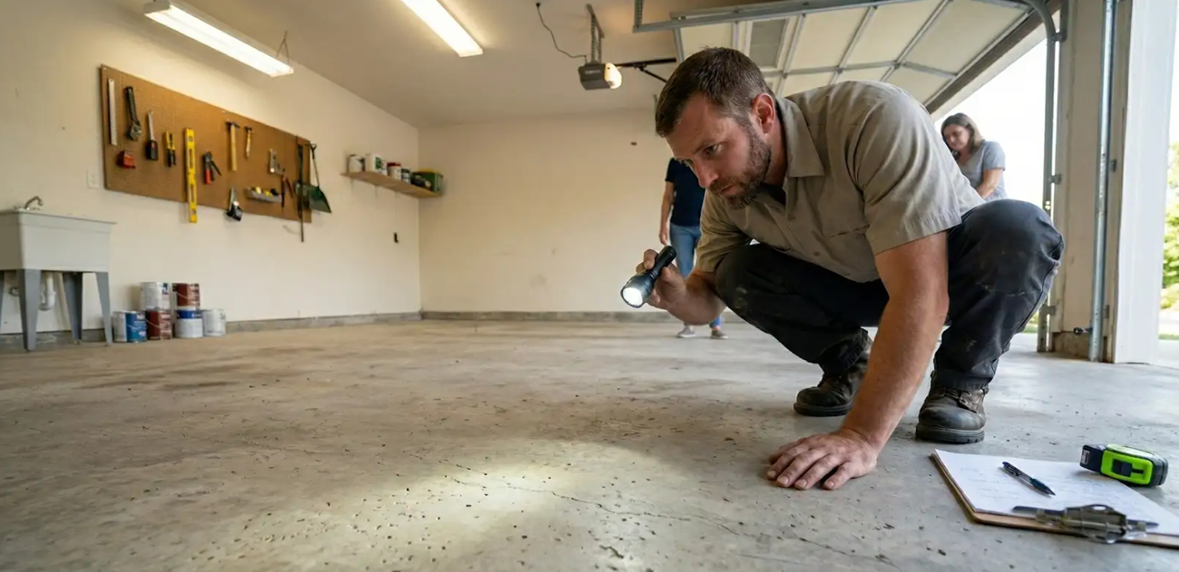
Stained concrete delivers a natural look and solid durability for the right spaces. A full polyaspartic system delivers performance that stain and seal simply can't match in demanding environments. Most decisions come down to one question: what does this floor need to handle?
If you're not sure which direction makes sense for your floor, that's exactly the kind of question worth talking through before you commit to anything.
Contact Elite Diamond Coatings for a free quote. We'll tell you what your floor actually needs, not just what costs more.