

Commercial Kitchen Epoxy Flooring Cost: Budget Planning for Food Service Excellence
Commercial kitchen epoxy flooring costs $4 to $12 per square foot installed in 2026, with heavier-duty cementitious urethane systems running $8 to $15 or more. For most Delaware Valley kitchens, though, the coating itself isn't what moves the budget; surface prep, slip-rated finishes, and integral coving do.
That distinction matters because of what's actually at stake with a commercial kitchen floor. A failed health inspection over flooring isn't just a fine since a porous or cracked floor can keep a kitchen closed until it's fixed. The fix is simpler than the stakes suggest: one seamless, non-porous coating leaves nowhere for bacteria or standing water to collect, and it usually costs less than owners expect.
Elite Diamond Coatings installs USDA-compliant commercial kitchen floors built to pass inspection across the Delaware Valley, so we know where the money goes and where it's wasted. Below, we break down the cost drivers, how epoxy compares to urethane, and how much to budget per kitchen size.
What Drives Commercial Kitchen Floor Coating Costs?
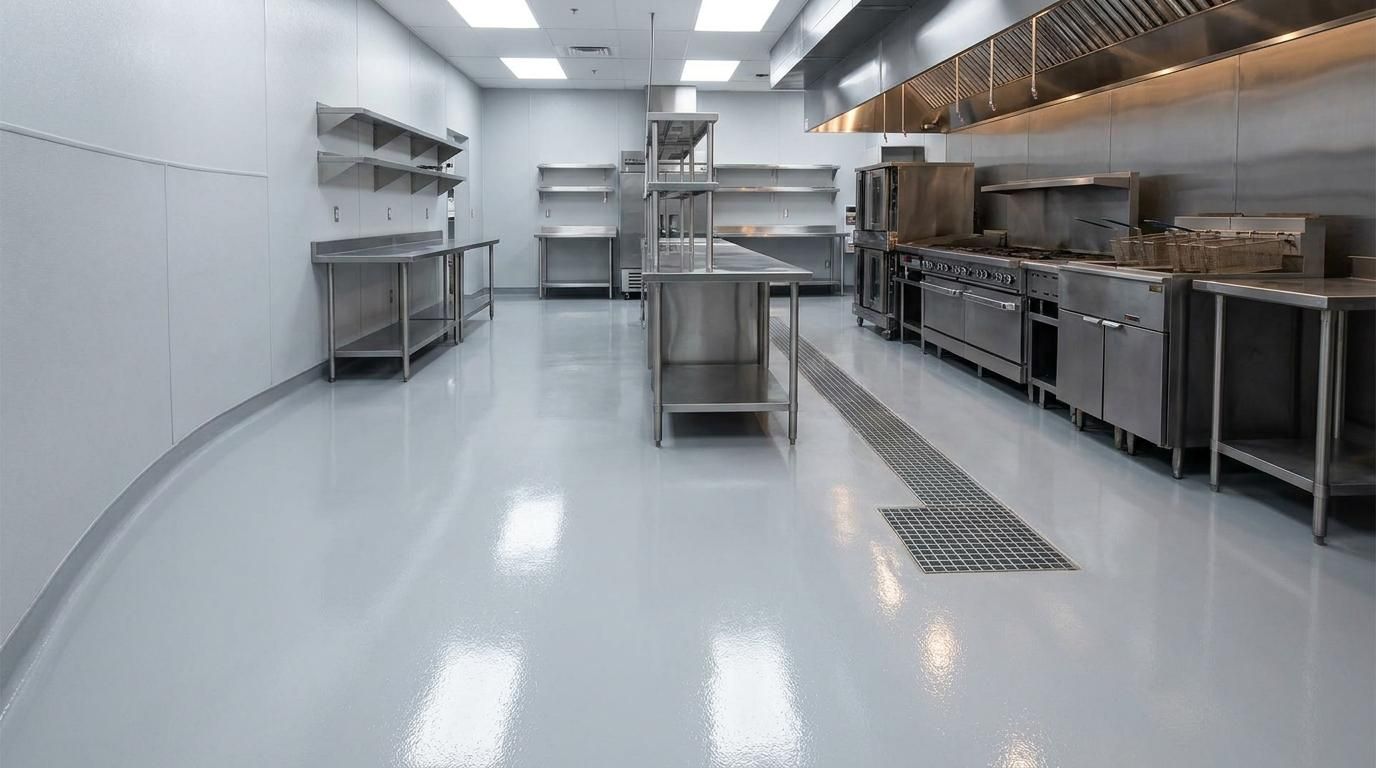
Two kitchens of the same size can land thousands of dollars apart, and the difference almost always comes down to what's under and around the coating. A tired diner kitchen in Havre de Grace with a cracked, previously coated slab needs far more prep than a clean slab in a brand-new space, and that prep is where the quotes separate. These are the factors that move a commercial kitchen flooring quote the most:
- Surface prep: diamond grinding, crack repair, and moisture testing before any coating goes down
- Square footage and layout: tight rooms with fixed equipment take more labor per foot
- Integral cove base: the sealed, curved transition where floor meets wall that inspectors expect
- Slip-resistant aggregate: anti-slip additives matched to greasy cook lines and wet dish pits
- Floor drains and thresholds: detailing around drains adds labor but stops standing water
Skip the prep to reduce the quote and the coating tends to fail early, which turns a one-time cost into a recurring repair bill.
Epoxy vs. Cementitious Urethane for Food Service Floors
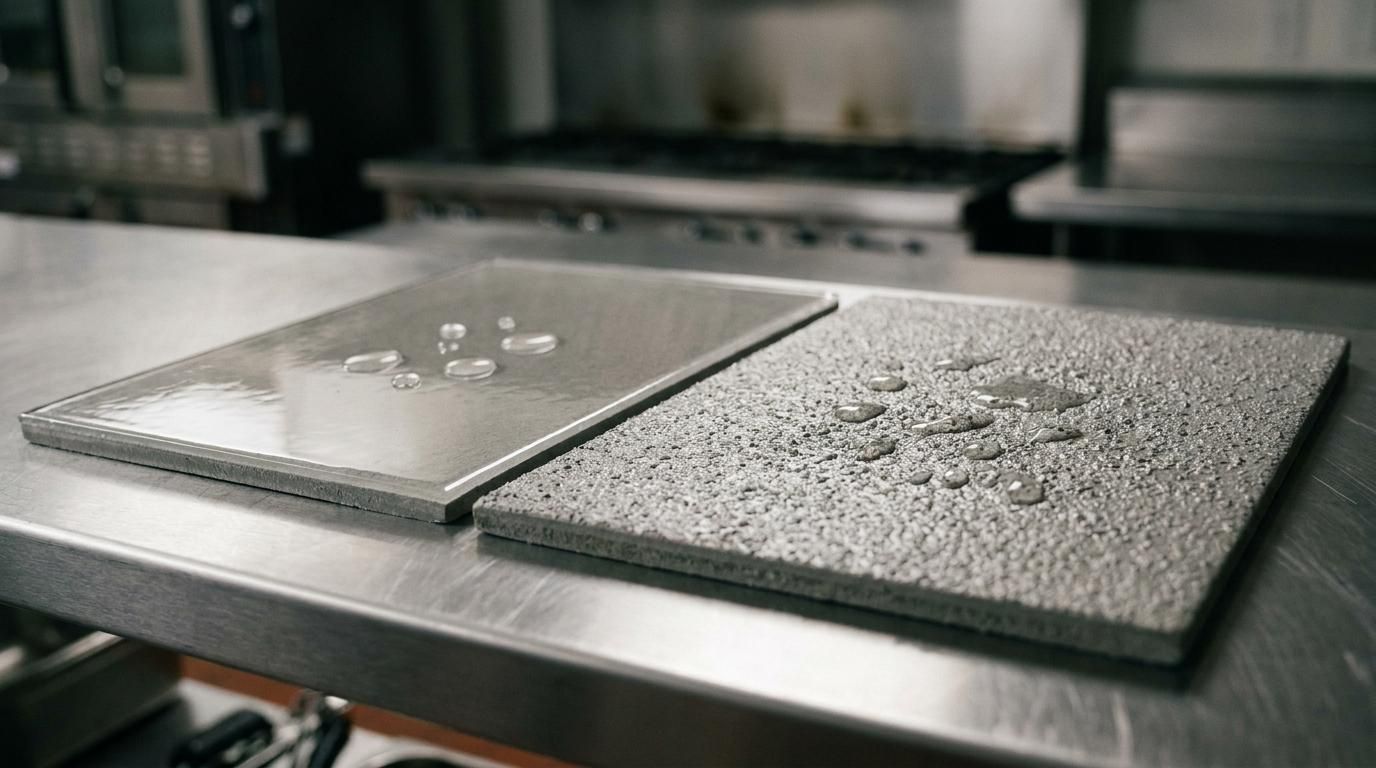
Most commercial kitchen quotes come down to two systems, and they aren't priced the same. Standard epoxy runs $4 to $12 per square foot installed and performs well in dry-to-moderate zones like prep stations and dry storage. Cementitious urethane costs $8 to $15 or more and is the go-to for heavy cook lines because it shrugs off thermal shock when boiling water or hot oil hits a floor that was just washed down cold.
Whichever system fits your kitchen, the build that passes inspection is seamless, non-porous, and antimicrobial. The layered build an epoxy kitchen floor system uses, with a primer, antimicrobial body coat, and slip-rated topcoat, is the category Elite Diamond Coatings installs for Delaware Valley food-service operators. A thin retail-grade coating poured over unprepared concrete is what peels under daily washdown.
Budget Ranges by Commercial Kitchen Size
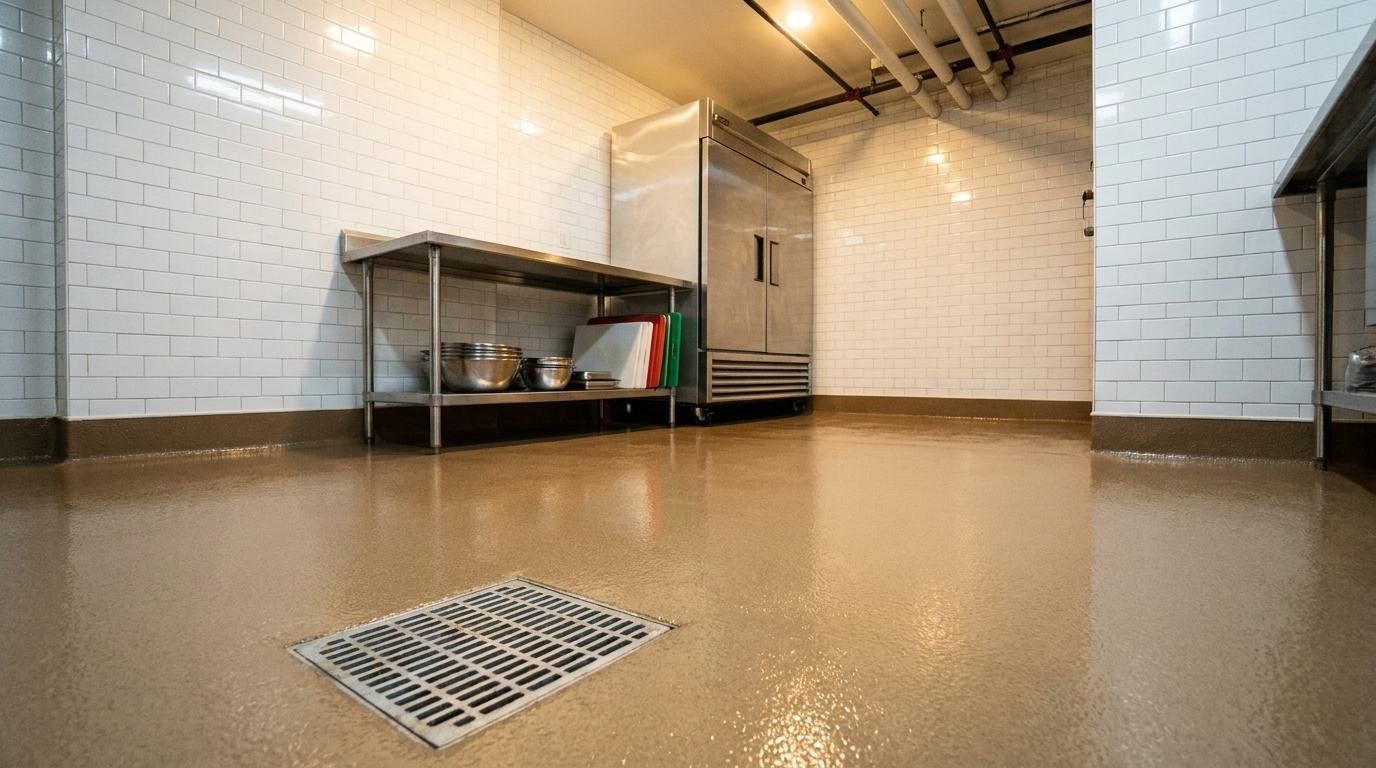
Translating per-foot pricing into a real budget is easier with kitchen size in mind. These 2026 ranges assume professional prep and a code-ready, slip-rated finish:
- Small kitchen (300-800 sq ft): roughly $2,000 to $9,000 installed, depending on the system
- Mid-size kitchen (1,000-2,000 sq ft): roughly $5,000 to $24,000 for urethane-grade durability
- Common add-ons: integral coving, extra drains, and old-coating removal each raise the total
Because every kitchen's prep is different, the most reliable number comes from an on-site assessment rather than a per-foot guess. Elite Diamond Coatings quotes commercial work alongside its other concrete floor coating services across Maryland, Delaware, and Pennsylvania, so the estimate reflects your actual slab and layout.
Frequently Asked Questions
How much does it cost to coat a 1,000-square-foot restaurant kitchen?
Coating a 1,000-square-foot restaurant kitchen typically costs about $5,000 to $15,000 installed in 2026, depending on the system. Standard epoxy sits at the lower end, while cementitious urethane for heavy cook lines pushes toward the top. Surface prep, coving, and drain detailing are what move a specific kitchen within that range.
How long does a commercial kitchen have to close for new flooring?
Most commercial kitchen floor coatings require only a short closure, often a single day to a long weekend, because the systems cure fast. The exact downtime depends on square footage, the number of coats, and cure conditions. Elite Diamond Coatings schedules around service hours and uses expedited curing so kitchens reopen quickly.
Is epoxy flooring USDA compliant for commercial kitchens?
Epoxy flooring can be USDA compliant for commercial kitchens when it is installed as a seamless, non-porous, antimicrobial system with no grout lines or cracks for bacteria to gather in. Compliance also depends on adequate slip resistance and integral coving at the walls. A coating that meets FDA and local health-department standards is what passes inspection.
Build Your Kitchen Floor Budget Around Compliance, Not Guesswork
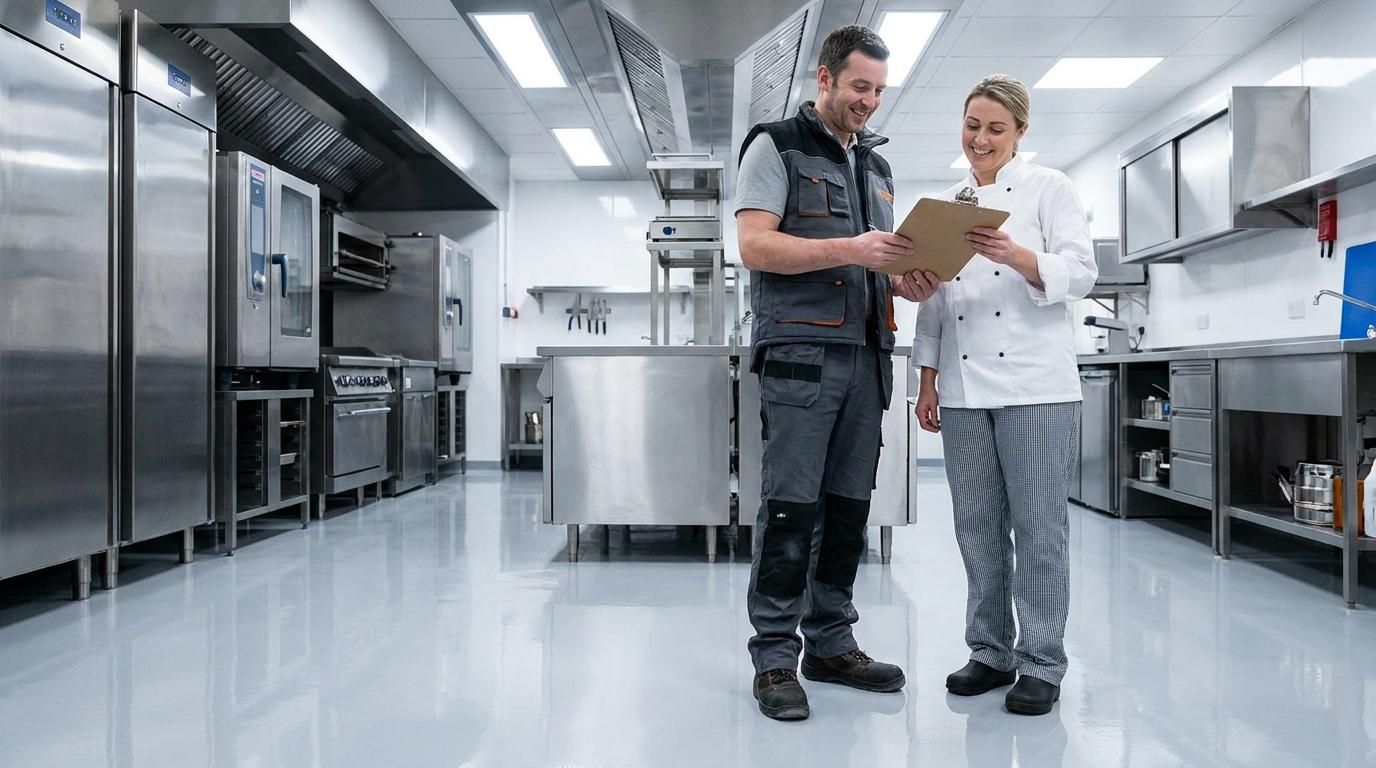
For a food-service floor, the real decision isn't choosing epoxy versus urethane based on price alone. It's matching the system to how hard your kitchen runs: lighter-duty prep zones can use epoxy, while high-heat cook lines and constant washdowns call for urethane-grade durability. Budget for the prep and coving that help either one pass inspection, and the floor earns its cost back by staying out of the repair cycle.
To price your kitchen with real numbers, contact Elite Diamond Coatings or call (443) 367-1355 for an on-site assessment across the Delaware Valley.