
Grind and Seal vs Polished Concrete: Comparing Cost, Durability, and Maintenance
Here's what you need to know upfront: grind-and-seal concrete uses diamond grinding to smooth the surface, followed by a protective topical sealer to create shine and guard against stains. Polished concrete takes a completely different approach: using progressively finer diamond grits and chemical densifiers to mechanically refine the concrete itself until it achieves a natural, permanent sheen. Same starting point, entirely different processes, and the implications for your wallet, maintenance schedule, and floor lifespan couldn't be more different.
At Elite Diamond Coatings, we frequently educate property owners throughout the Delaware Valley on the differences between grind-and-seal systems and polished concrete so they can make informed flooring decisions. Whether you're considering a Wilmington warehouse or a West Chester retail space, understanding these fundamental differences and how they translate into real costs and performance over time is essential before you commit to either option.
What Is the Difference Between Grind-and-Seal and Polished Concrete?
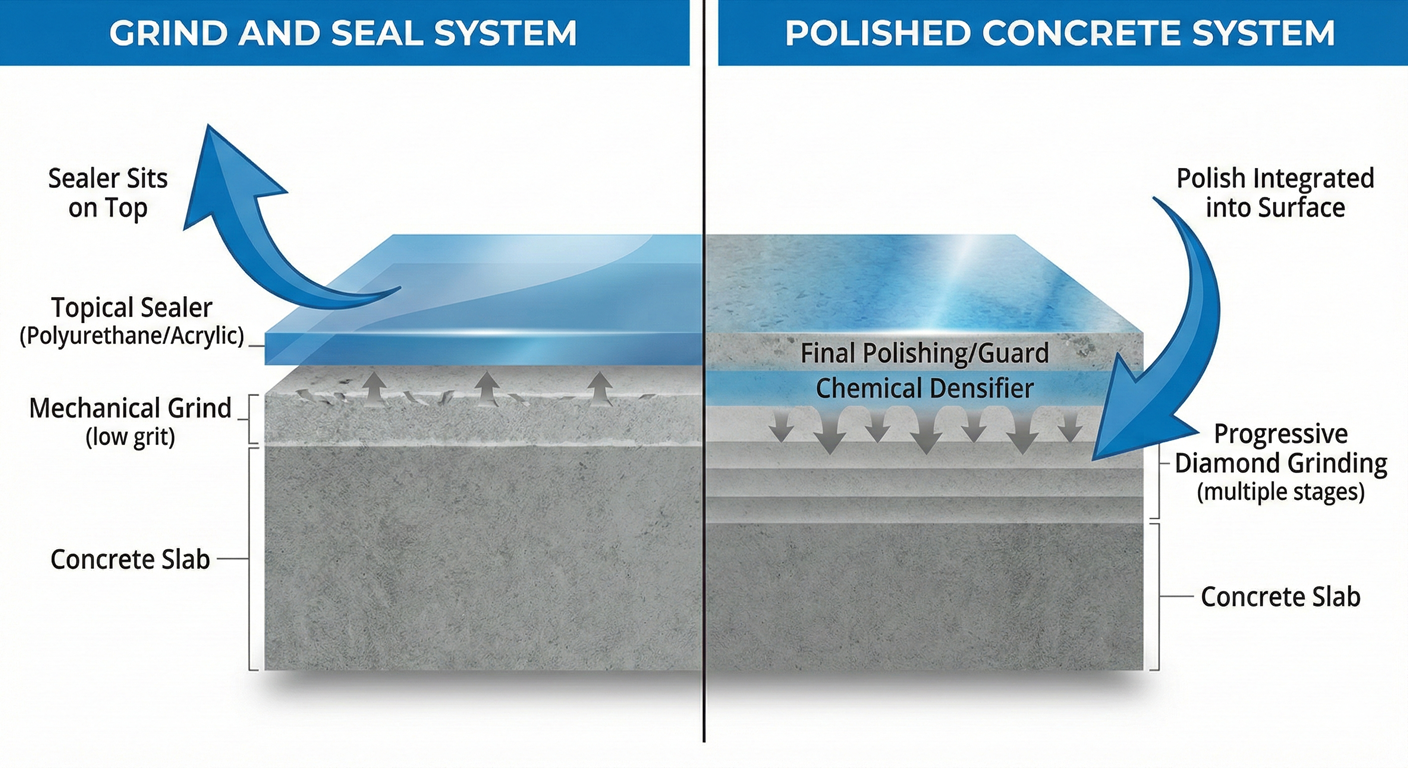
The primary difference lies in how the final surface is achieved and protected. A grind-and-seal process involves mechanically grinding the concrete to remove imperfections, followed by applying a high-quality topical sealer such as polyurethane or polyaspartic. This sealer provides the "wear layer" and determines the final sheen level.
In contrast, polished concrete uses a series of diamond-bonded abrasives to "hone" the concrete to a specific gloss level. During the process, a chemical densifier is applied, reacting with the concrete to make it harder and more dust-resistant.
Because polished concrete relies on the slab's density rather than a coating, it's considered a "breathable" floor—a significant advantage in areas with high vapor transmission.
Cost Comparison: Initial Investment vs. Long-Term Value

Between grind-and-seal and polished concrete, the grind-and-seal method is almost always the more affordable initial investment. Because it requires fewer grinding stages and relies on a topical product to create the finish, labor costs are lower. For many homeowners in areas like Hockessin or Kennett Square, grind-and-seal provides the "industrial chic" look at a fraction of the cost of true polishing.
Polished concrete incurs higher upfront costs due to extensive labor and specialized equipment. However, it often provides better long-term value for high-traffic commercial environments. Since there is no topical sealer that wears off, you won't experience "traffic patterns" or peeling that can occur with poorly maintained sealed floors.
Residential vs. Commercial Considerations
The decision often hinges on expected foot traffic. A retail showroom or busy restaurant might benefit from the long-term resilience of polished concrete, as it eliminates the need for periodic resealing that can disrupt operations.
Conversely, a residential basement near the Brandywine River might be better served by a grind-and-seal system, which offers excellent moisture protection at a more accessible price point.
When installing grind-and-seal systems, we always evaluate the slab’s moisture vapor transmission because it directly affects the performance and longevity of topical sealers.
| Feature | Grind and Seal | Polished Concrete |
|---|---|---|
| Initial Cost | Lower ($) | Higher ($$$) |
| Installation Time | 1–2 Days | 3–5 Days |
| Aesthetics | Consistent, topical sheen | Natural, stone-like depth |
| Stain Resistance | Excellent (Topical barrier) | Good (Requires guard/sealer) |
| Lifespan | 5–7 years before resealing | 10–20+ years with proper care |
Durability and Performance in Local Conditions
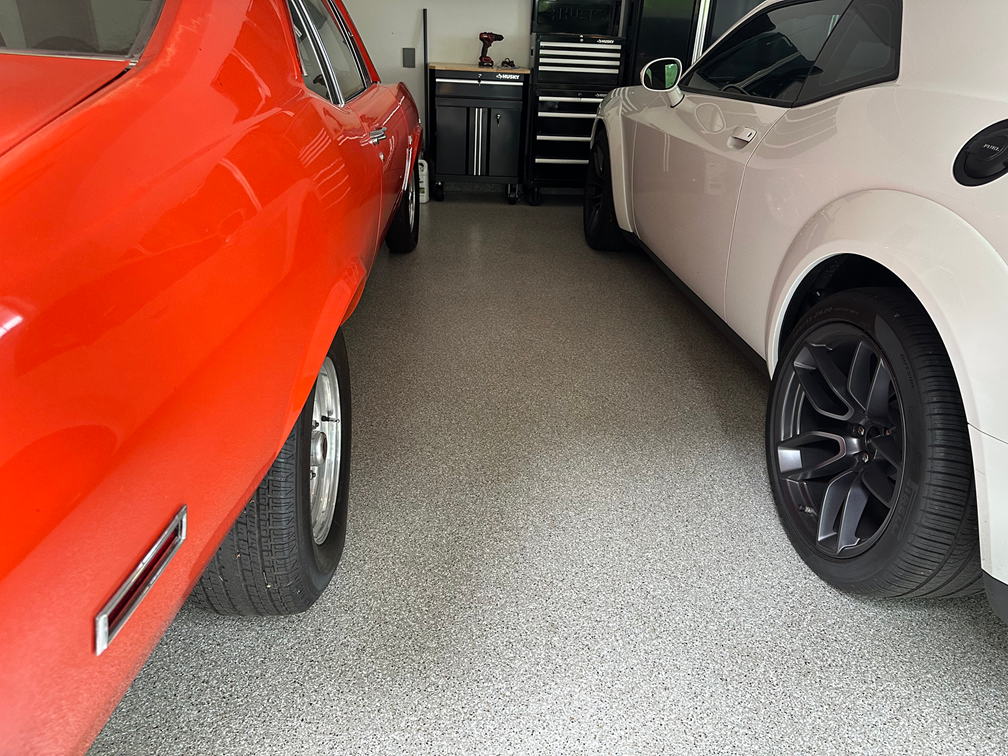
Durability is where the two systems diverge. A grind-and-seal system is exceptionally durable against chemical spills and moisture because the topical sealer acts as a non-porous barrier. This makes it popular for basements and residential garages where oil spills or water seepage might occur.
Elite Diamond Coatings often recommends a polyaspartic topcoat for grind-and-seal projects to ensure maximum resistance to road salt and brine common during Pennsylvania and Delaware winters.
In the Delaware Valley, significant temperature swings cause concrete to expand and contract. A high-quality grind-and-seal system with a flexible topcoat can move with the concrete, preventing hairline cracks. While polished concrete doesn’t tolerate slab movement as well, its hardness makes it nearly impervious to the "dusting" that occurs when bare concrete breaks down.
Polished concrete is incredibly hard and resistant to scratches from foot traffic. However, it can be susceptible to "etching" from acidic liquids if not cleaned immediately. For commercial spaces with heavy equipment or constant foot traffic, the hardness of polished concrete is unmatched.
Maintenance Requirements: Keeping Your Floors Pristine
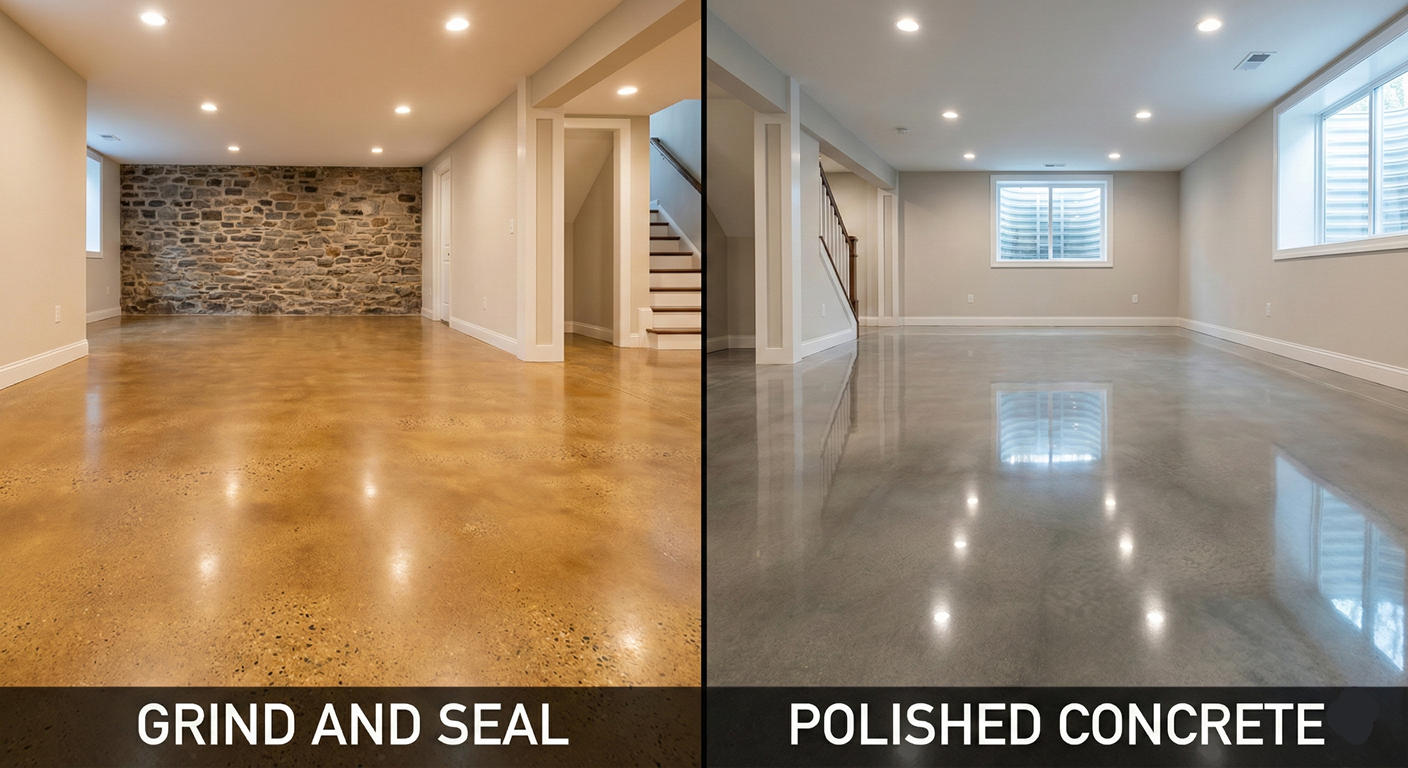
For a grind-and-seal floor, daily maintenance involves simple dust mopping and occasional damp mopping with pH-neutral cleaner. Avoid abrasive cleaners that can dull the topical sealer. Every 5 to 7 years, depending on traffic, the floor will need light sanding and a new topcoat to restore its luster.
Polished concrete maintenance also relies on pH-neutral cleaners. Instead of resealing, polished floors may eventually require "high-speed burnishing" with specialized pads to restore shine. Because the surface is so hard, it doesn't trap dust or allergens, making it an excellent choice for those concerned with indoor air quality.
Let Us Help You Choose the Right Flooring Solution
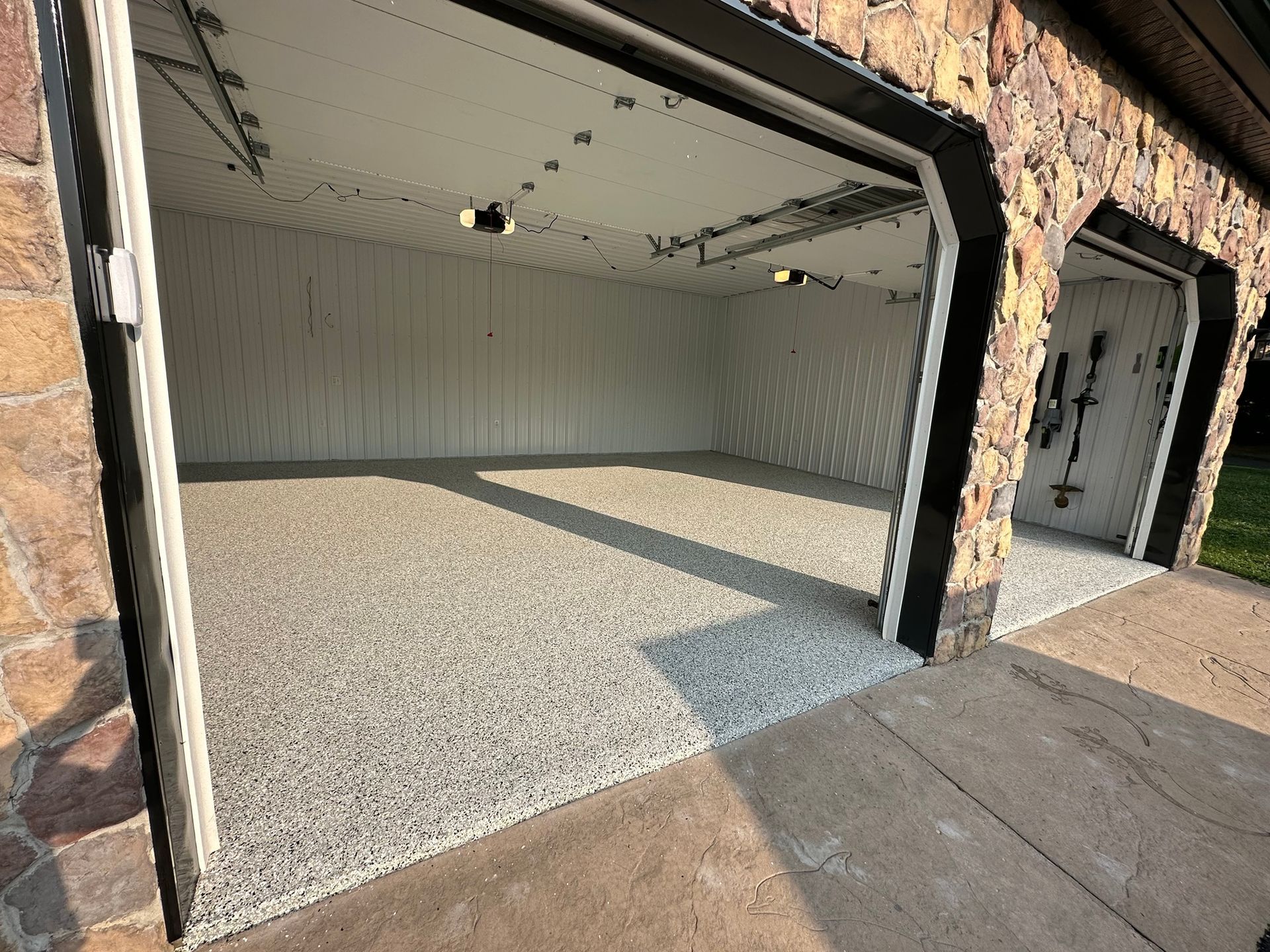
The "best" floor depends on your specific goals. If you want a cost-effective, moisture-resistant, and aesthetically pleasing floor for your home, grind and seal is likely the winner. If you’re looking for a lifetime flooring solution for a high-traffic commercial space and have the budget for the initial installation, polished concrete is the gold standard.
Elite Diamond Coatings provides expert consultations for residential and commercial clients, serving the entire Delaware Valley with professional, licensed, and insured services.
Contact us today to schedule your free on-site consultation. Let us help you determine whether a grind-and-seal system is the right fit for your space.