

If you manage a warehouse in the Delaware Valley and you're trying to budget for a floor coating project, the first thing to know is that a single per-square-foot number rarely tells the whole story. Warehouse floor coating costs depend on the condition of your slab, the coating system specified for your traffic and use, and the scope of the installation, not square footage alone.
This guide walks through what actually drives pricing, why an early estimate differs from a final quote, how installation scheduling typically works around an active facility, and what to confirm in writing before you sign anything.
Elite Diamond Coatings is a veteran-owned concrete coating company serving the Delaware Valley from its home base in Rising Sun, Maryland, with work extending into communities like Hockessin, Delaware, and Oxford, Pennsylvania. Warehouse floor coatings are among the company's services, using commercial-grade coating systems selected for each facility's traffic and operating conditions.
These include polyurea, polyaspartic, urethane, and epoxy-polyaspartic options applied over mechanically diamond-ground concrete.
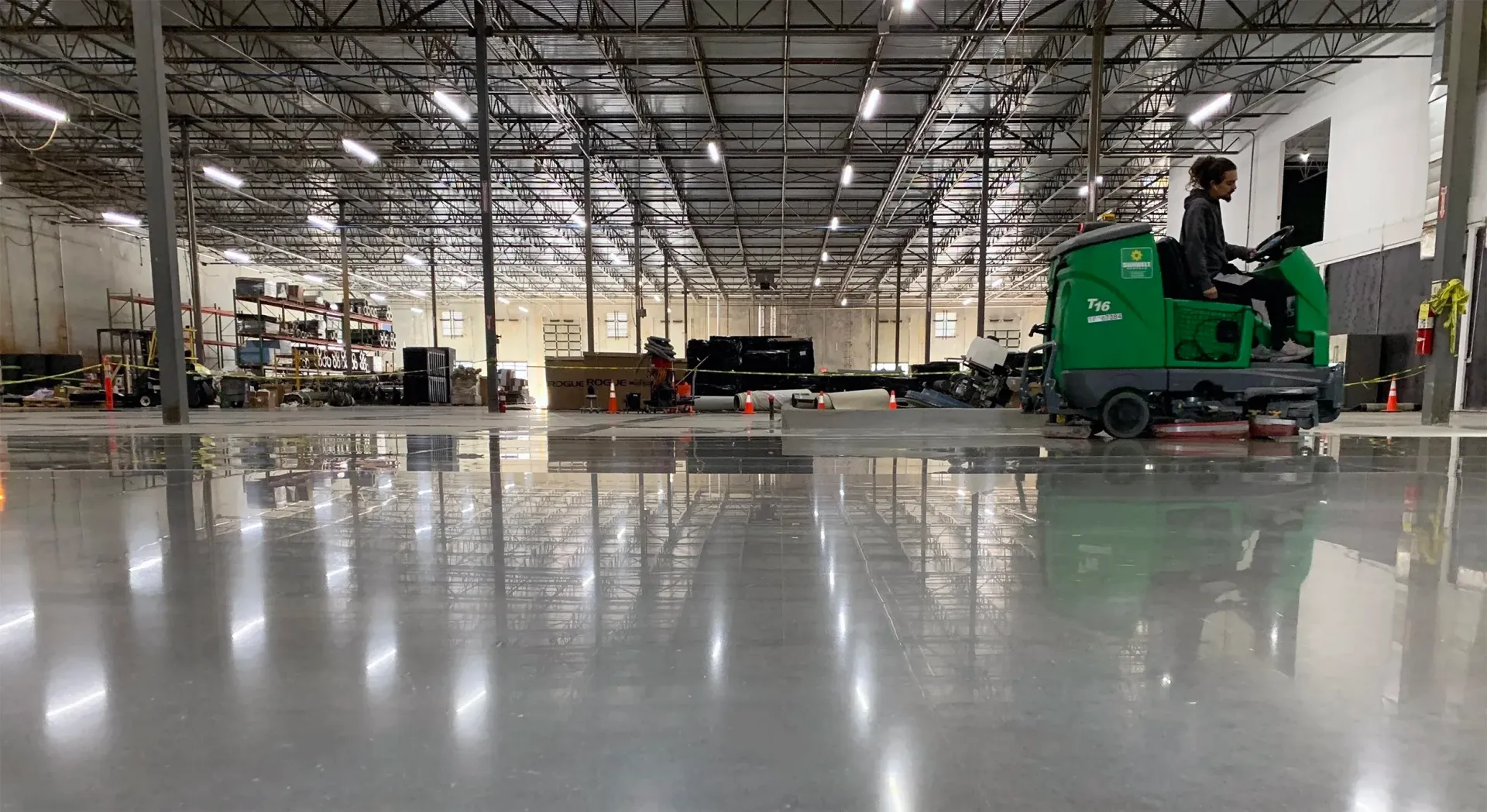
What Actually Drives Warehouse Coating Costs
Before any number can be attached to your project, a handful of variables need to be assessed. Elite Diamond Coatings identifies several factors that influence the final per-square-foot price on a warehouse job:
- Slab condition: Cracks, prior coatings, contamination, or unevenness affect how much preparation is required.
- Total coated area: Larger or more complex floor plans change labor and material scope.
- Heavy-duty system requirements: Warehouses with forklift traffic or heavy loads may need a thicker, more durable build than a light-traffic space.
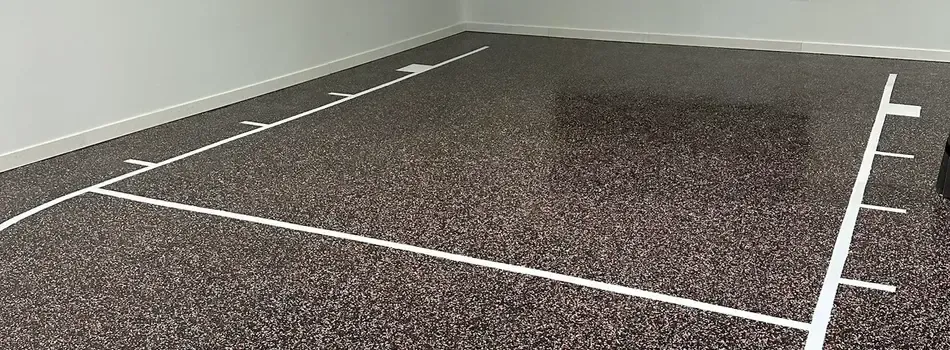
- Striping and markings: Safety lanes, pedestrian walkways, and zone markings add to the scope.
- Moisture mitigation: Slabs with elevated moisture may require additional treatment before coating.
This lines up with broader industry guidance on commercial concrete coatings. The Association for Materials Protection and Performance (AMPP) explains that thinner coating systems are generally better suited to lighter conditions, while thicker systems may be appropriate for more demanding mechanical and chemical exposure.
In other words, "epoxy flooring" isn't a single product. Two warehouses can receive very different systems depending on how the floor is actually used, and that difference shows up in the price.
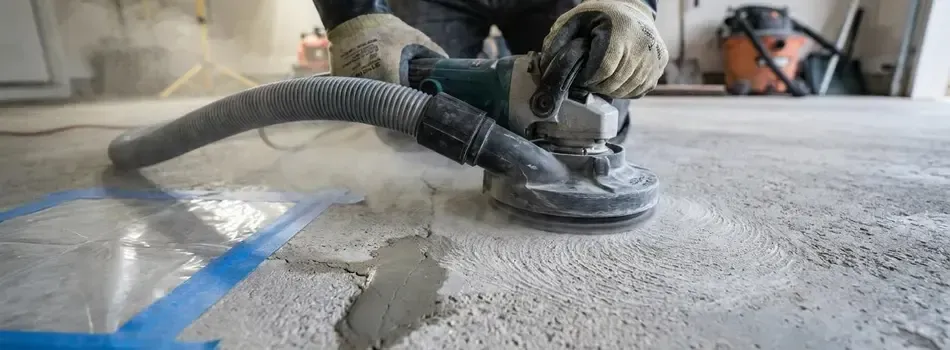
Why an Early Estimate Isn't Your Final Quote
Because slab condition and system requirements vary so much from one building to the next, Elite Diamond Coatings provides a firm per-square-foot warehouse coating price after an on-site assessment rather than relying on a remote square-footage calculation.
This also makes it worth comparing proposals carefully if you're collecting quotes from more than one contractor. Two bids with similar per-square-foot numbers can represent very different scopes of work.
When comparing proposals, it helps to confirm that each one accounts for the same ground:
- The total coated area each quote is actually based on
- What surface preparation is included, and what would trigger an added charge
- The specific coating system and build thickness being proposed, not just a generic product name
- Whether striping, moisture mitigation, or repair work is included or billed separately
- How any additional work discovered during preparation would be priced
AMPP's guidance on surface preparation reinforces why this matters: a proper assessment looks at existing coatings, contamination, slab soundness, and moisture concerns before a preparation method or system is chosen.
A quote that skips this step, or doesn't say how it would handle an unexpected issue, is harder to rely on.
Scheduling Around a Working Warehouse
For warehouse projects, Elite Diamond Coatings works with facility managers to map out the installation sequence before work begins.
Where the building's layout, operating schedule, and required curing periods allow, the company can phase work by zone and schedule around shifts to help reduce operational disruption.
This approach may allow portions of a warehouse to remain operational during installation, but it doesn't guarantee that every facility can avoid a shutdown. The actual sequencing depends on access, safety requirements, traffic patterns, and the coating system selected.
One detail worth understanding when planning a return-to-service date: a coated floor being walkable doesn't mean it's ready for forklift or heavy-equipment traffic.
As an example of how this works for coating products generally, Sika's published data for its Sikafloor-264 system lists separate timeframes for foot traffic, light traffic, and full cure at 68°F: approximately 12 hours, two days, and seven days, respectively.
That's a manufacturer example rather than a timeline for an Elite Diamond Coatings installation.
It illustrates why it's worth asking a contractor exactly when your floor will be ready for the kind of traffic your warehouse actually runs, not just when it's safe to walk on.
Confirm Warranty Terms Before You Sign
Warranty coverage is another area where the specifics matter more than the headline.
Elite Diamond Coatings advertises a 1-year commercial warranty for warehouse and manufacturing floors exposed to forklift and heavy-equipment traffic.
According to the company's published warehouse service information, this warranty covers peeling, flaking, or loss of adhesion caused by installation defects, including the materials and labor necessary for covered repairs.
The warranty excludes conditions such as scratches, tire wear, impact damage, chemical abuse, moisture vapor transmission, foundation movement, and normal wear and tear. Basic non-abrasive maintenance is also required to maintain coverage.
This is an important distinction from the lifetime-warranty messaging associated with other coating applications.
Before finalizing any warehouse coating project, confirm the applicable warranty in writing, including:
- How long coverage lasts for your specific installation
- Which defects and repairs are covered
- Whether labor and replacement materials are included
- What exclusions and maintenance requirements apply
- How to report a problem and request warranty service
Getting these details in writing upfront avoids confusion later if a question about coverage comes up.
If Full Coating Isn't the Right Fit
Not every concrete floor needs a full coating system.
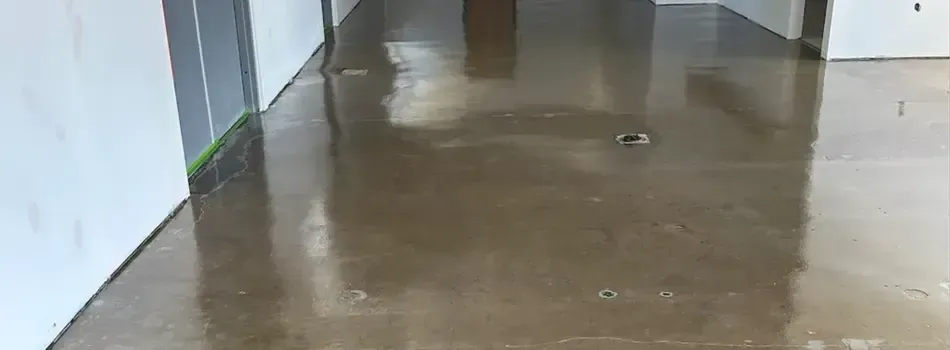
For warehouse spaces or sections where a lighter-duty treatment makes more sense, grind and seal concrete is another option Elite Diamond Coatings offers.
This approach may be appropriate where the goal is to improve the concrete's appearance, reduce dusting, and simplify maintenance while retaining a more natural concrete finish.
It carries its own preparation, material, maintenance, and cost considerations, so it is worth comparing against a full protective coating based on how the space will actually be used.
Get a Firm Number for Your Warehouse
The most reliable way to budget for a warehouse floor coating project in the Delaware Valley is to start with an on-site assessment rather than a square-footage guess.
Elite Diamond Coatings serves facilities throughout the region, from its Rising Sun, Maryland home base to communities like Hockessin, Delaware, and Oxford, Pennsylvania.
To schedule an in-person estimate for your warehouse, call (443) 367-1355.