

Epoxy Flooring Pros and Cons: Is It Worth It for Your Delaware Valley Home? (2026)
Epoxy flooring's real pros and cons come down to this: it's durable, seamless, and easy to clean, but standard epoxy can amber in direct sun and may fail early if it's installed over unprepared concrete. What's worth knowing up front is that most of the cons people list—peeling, yellowing, a slippery surface—aren't faults of the coating at all. They're symptoms of a thin product or a skipped prep step.
That's the distinction that changes the whole question, because the version of epoxy most people complain about is a hardware-store kit, not a professionally installed system. So for a Delaware Valley home, the useful question isn't "epoxy, yes or no," but whether the system and the install fit how you'll actually use the floor. Elite Diamond Coatings installs professional-grade concrete floor coatings across the Delaware Valley, where prep separates a floor that lasts from one that peels. Let’s run through the honest pros, the real cons and what causes them, and whether epoxy is worth it for your space.
The Pros of Epoxy Flooring
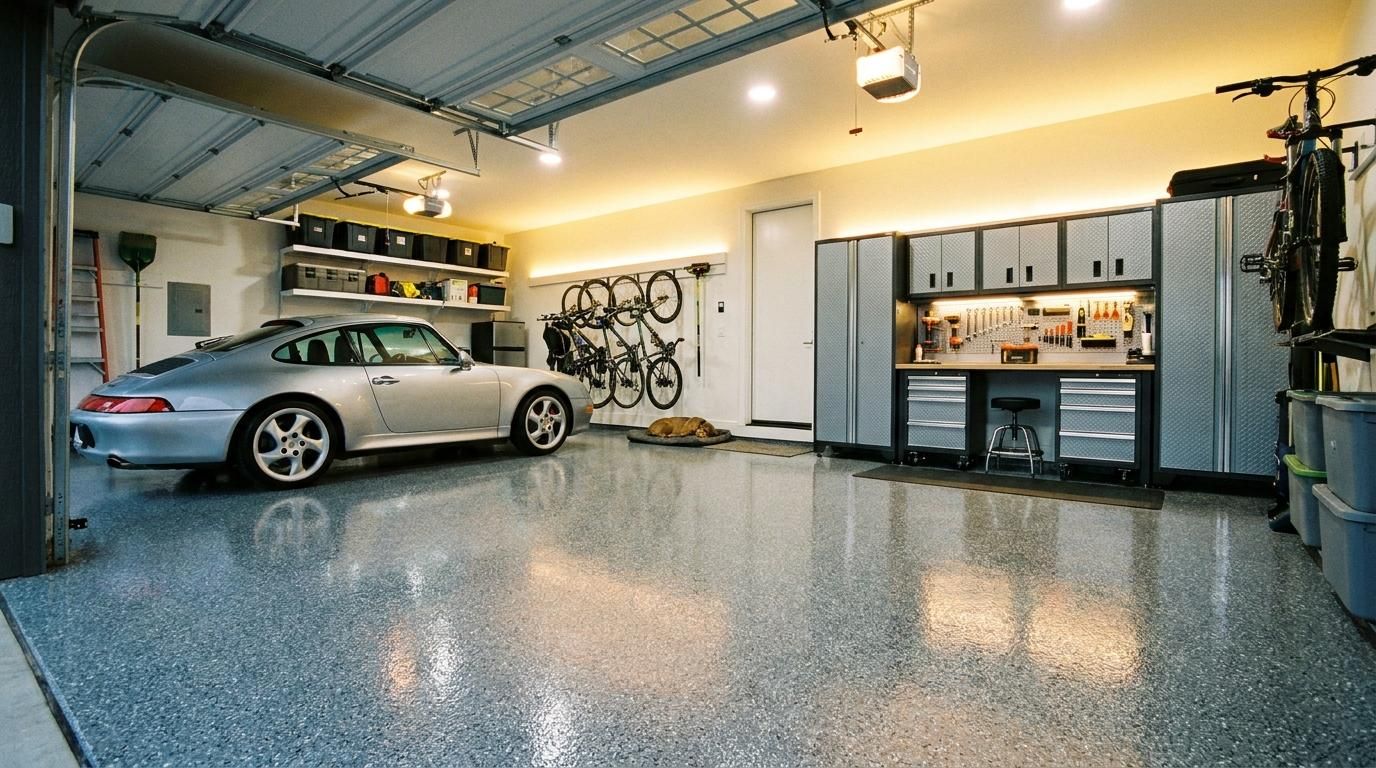
Professionally installed epoxy earns its popularity for a handful of practical reasons:
- Durability: a hard, impact- and abrasion-resistant surface that handles cars, tools, and foot traffic
- Seamless and easy to clean: no grout lines or pores, so spills wipe up and dirt sweeps away
- Resists stains and chemicals: shrugs off oil, road salt, and most garage chemicals
- Low cost per year: at $3 to $8 per square foot installed, a floor that lasts 15 to 20 years is cheap over time
- Customizable: solid colors, flake blends, and metallic finishes to match any space
The Cons of Epoxy Flooring (and What Actually Causes Them)
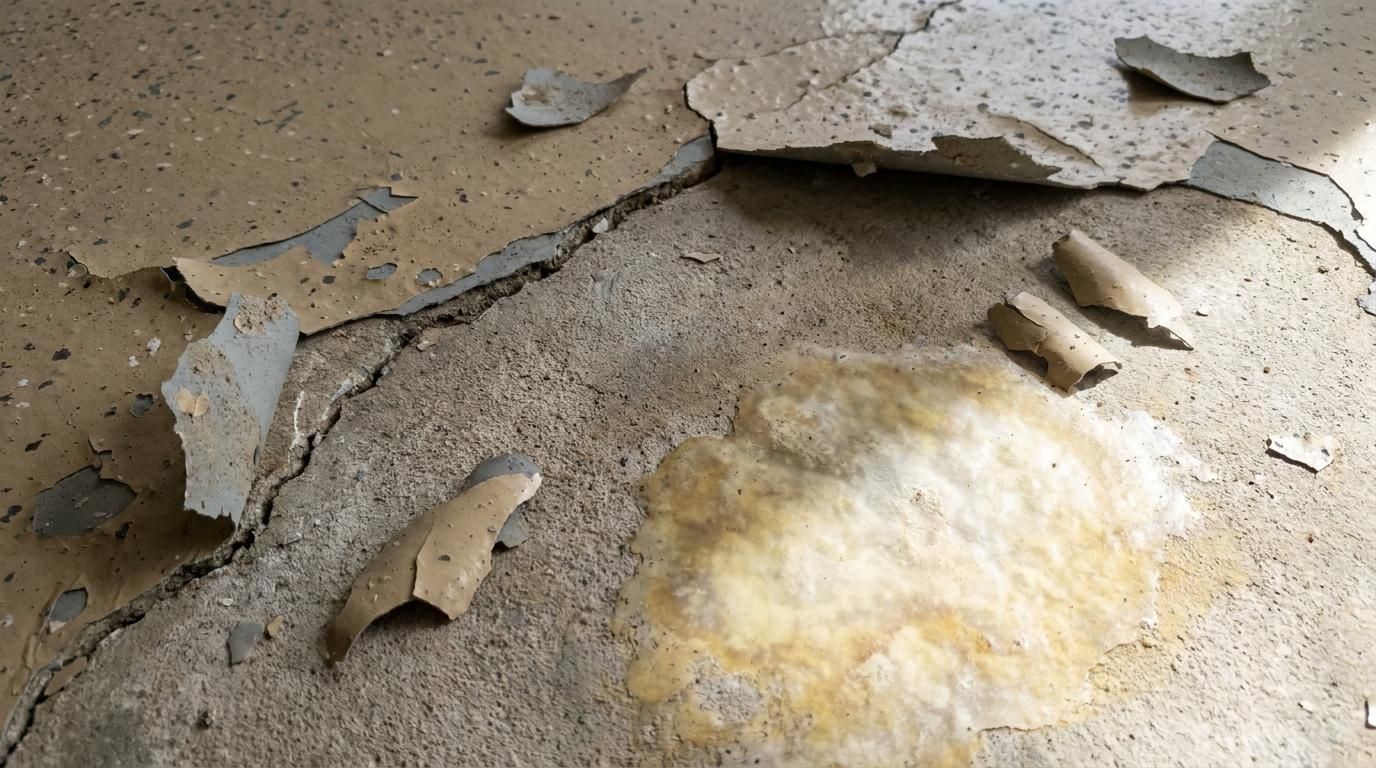
Epoxy has real drawbacks, but notice that most of the common epoxy floor problems are rooted in product choice or installation:
- Can yellow in sunlight: standard epoxy ambers under UV, which a UV-stable polyaspartic topcoat solves
- Slippery when wet: a smooth topcoat is slick, but an anti-slip additive fixes it
- Rigid surface: epoxy won't flex with a cracking slab, so prep and crack repair matter
- Cure and downtime: a professional floor needs about 24 to 72 hours before full use
Is Epoxy Flooring Worth It for Your Home?
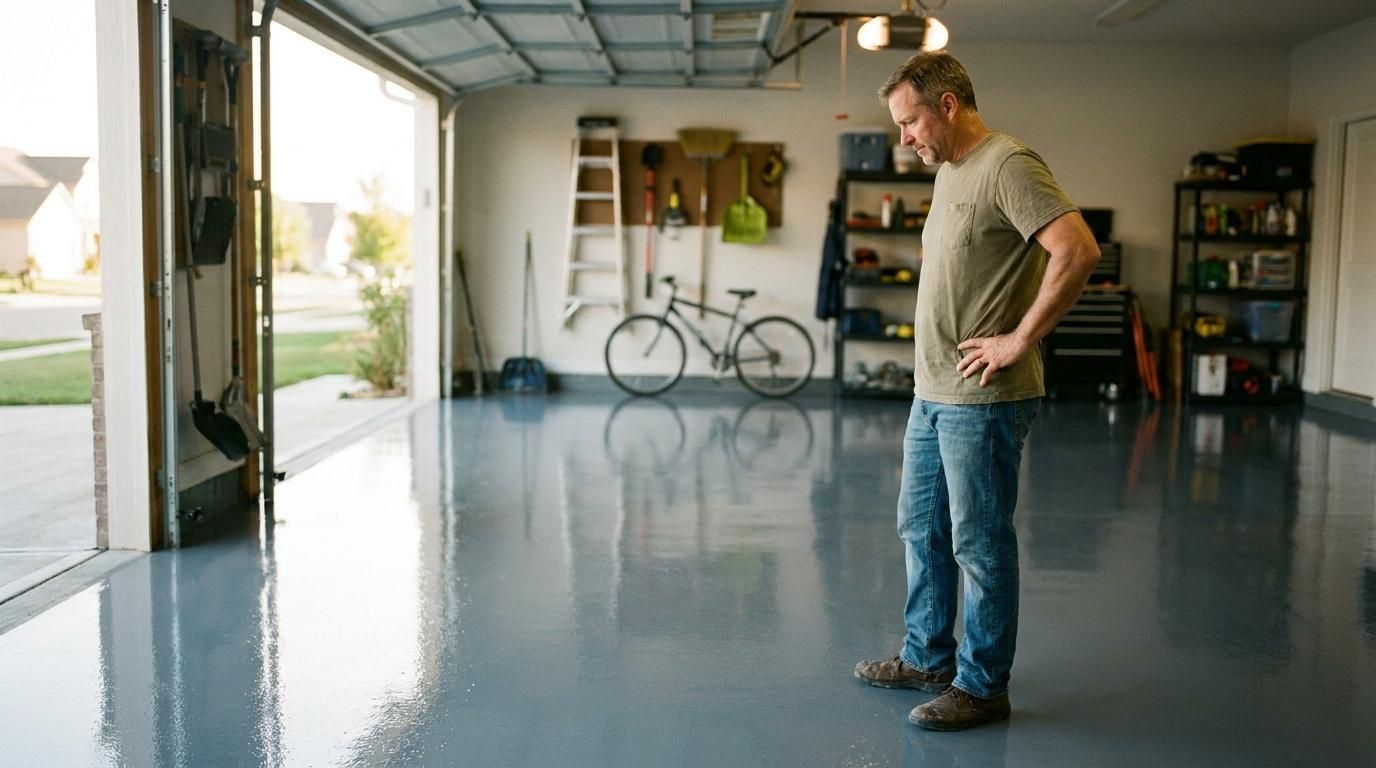
Whether epoxy is worth it depends on the space and how it's installed. A few guidelines help:
- Great for garages, basements, and workshops that need a tough, washable floor
- For sun-exposed or premium spaces, a UV-stable polyaspartic topcoat is often the better pick
- Always worth a professional install, since DIY kits are where most epoxy complaints start
If sunlight or fast curing matters, it's worth comparing polyaspartic vs polyurea systems along with epoxy.
Frequently Asked Questions
What are the main pros and cons of epoxy flooring?
The main pros of epoxy flooring are durability, a seamless easy-to-clean surface, stain and chemical resistance, and a low cost per year. The main cons are that standard epoxy can yellow in sunlight, gets slippery when wet without an additive, and fails early if installed over unprepared concrete. Most of those cons are install or product issues, not flaws in epoxy itself.
Is epoxy flooring worth the money?
For a garage, basement, or workshop, a professionally installed epoxy floor is usually worth the money because it lasts 15 to 20 years with little maintenance, which keeps the cost per year low. The value drops sharply with a cheap DIY kit, which often fails in one to three years and has to be stripped and redone.
Does epoxy flooring have more pros or cons?
For most Delaware Valley homes, professionally installed epoxy has more pros than cons, since its common drawbacks like yellowing, slipperiness, and cracking are all preventable during installation. The biggest genuine con is sensitivity to poor surface prep, which is exactly why a professional install matters so much.
So, Is Epoxy Flooring Worth It?
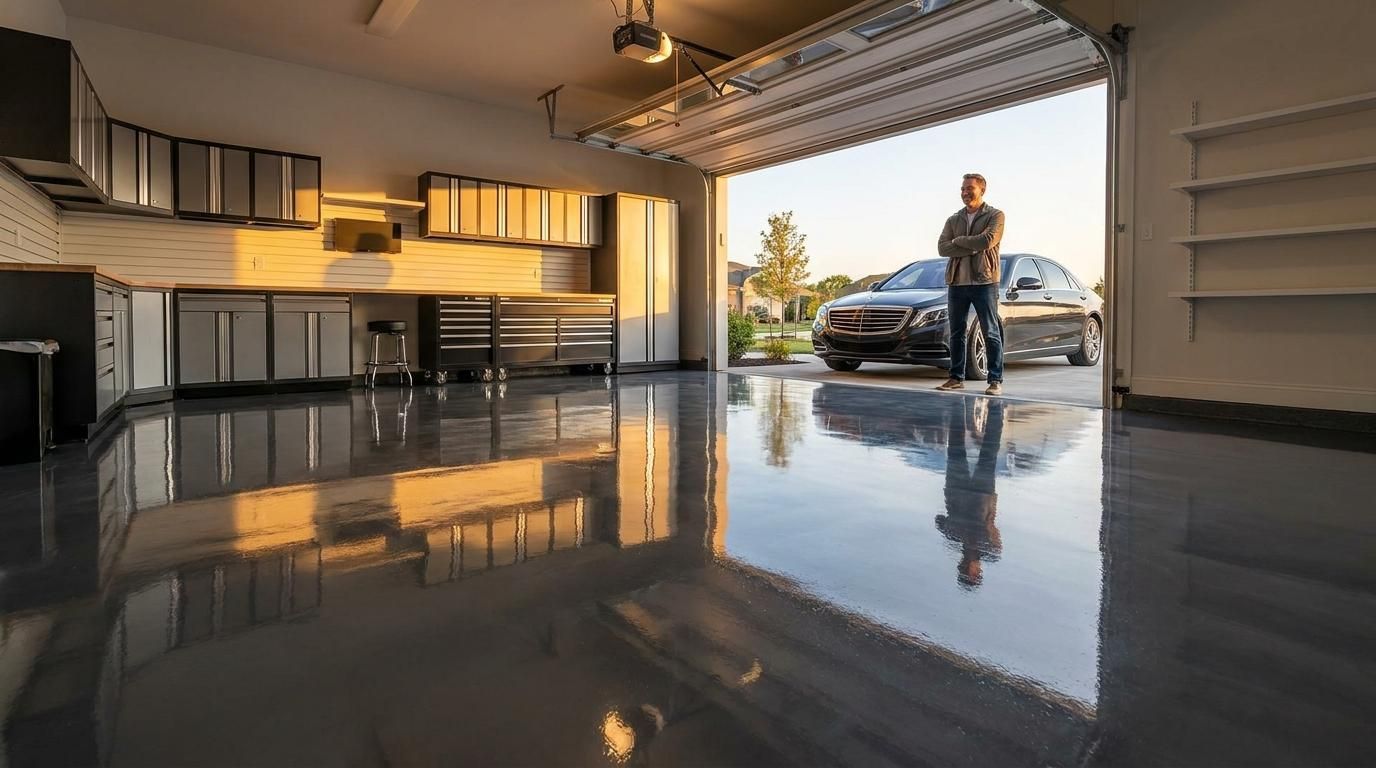
Weighed fairly, epoxy flooring's pros, namely durability, easy cleaning, and a low cost per year, outweigh its cons for most Delaware Valley garages and basements, because the cons are nearly all preventable. Yellowing, slipperiness, and early peeling come down to the product and the prep, not epoxy as a material. As long as you choose a UV-stable system where it matters and professional installation, epoxy is well worth it.
Still not sure if epoxy is right for your space? Contact Elite Diamond Coatings or call (443) 367-1355 for honest advice and a free assessment across the Delaware Valley.